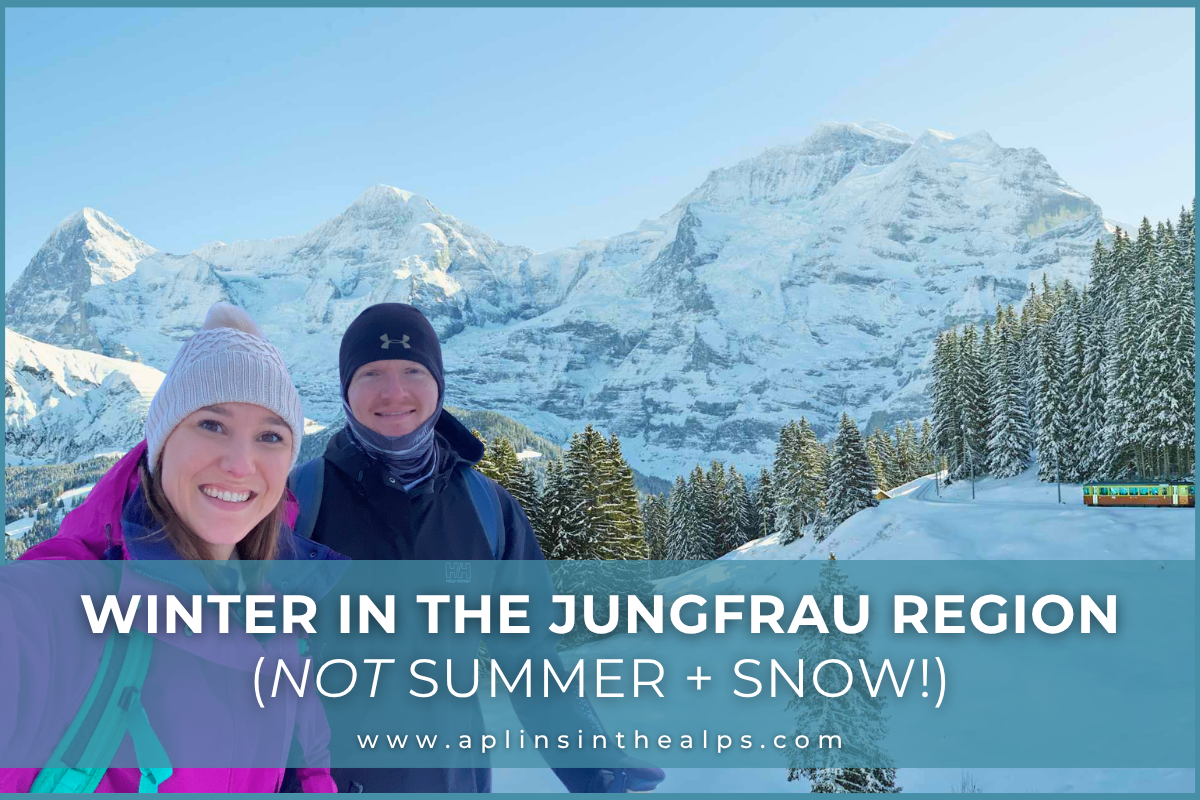
If you’re planning a Winter trip to the Jungfrau Region, you’re probably picturing snowy villages, mountain trains, cozy meals, and those famous views of the Eiger, Mönch, and Jungfrau.
And Winter here really is magical.
But here’s the mistake we’ve seen a lot of travelers make: planning your Winter trip to the Jungfrau Region as if it’s summer…and assuming the only thing that changes is snow.
So in this video, we’re going to show you how to plan a Winter trip to the Jungfrau Region based on what winter is actually like.
Here’s what we’ll cover:
- Snow Expectations
- Trip Planning
- Where to stay
- What’s open
- Winter Activities
- Pace + Crowds
- Plan for Winter…not Summer
Want to Watch instead of Read?
Reality Check: Snow Expectations
When we talk about Winter in the Jungfrau Region, we mean December through March. But that doesn’t mean there’s snow on the ground during the entire season.
In fact, Winter doesn’t look the same everywhere — conditions look different depending on the month and the elevation.

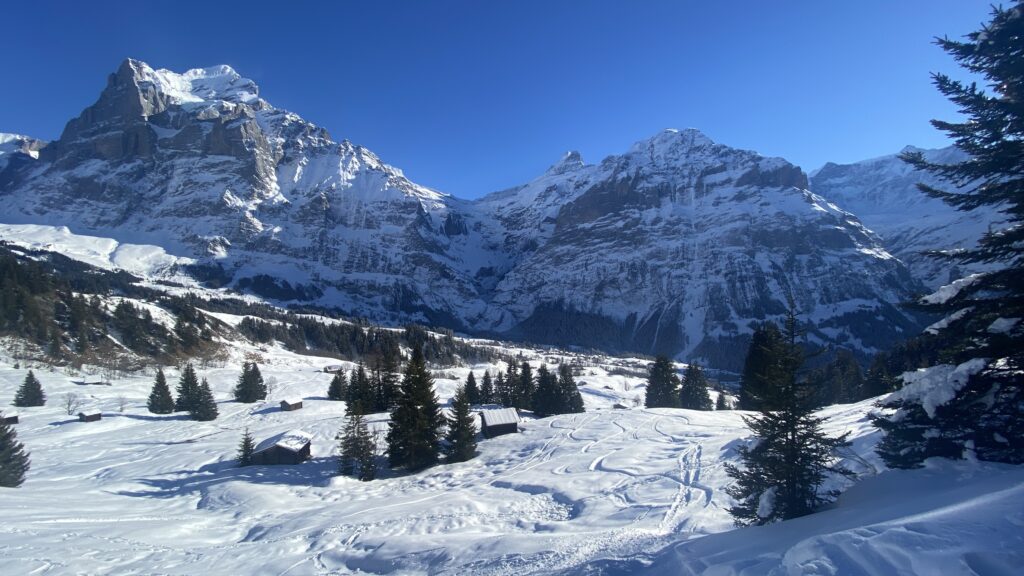

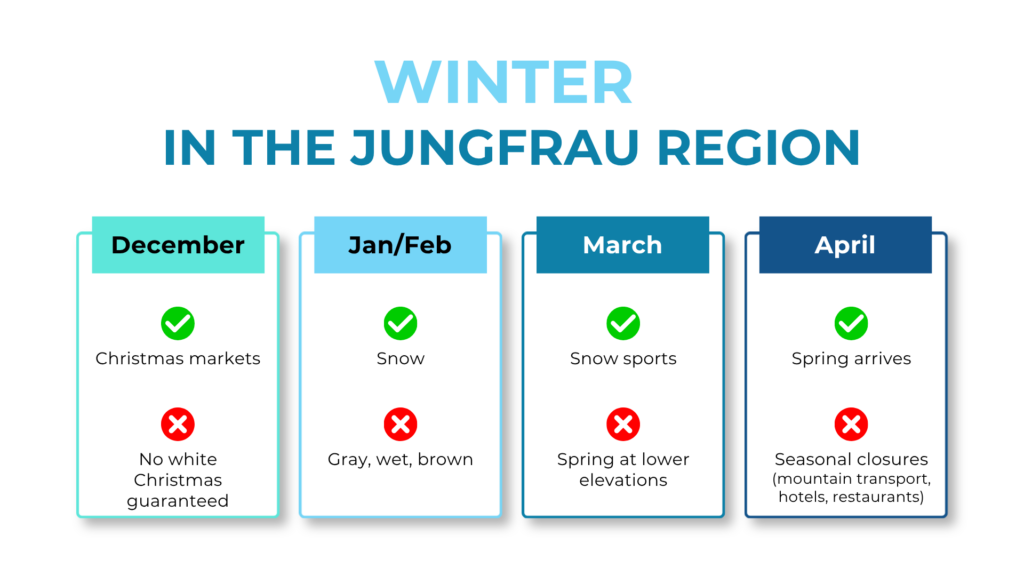
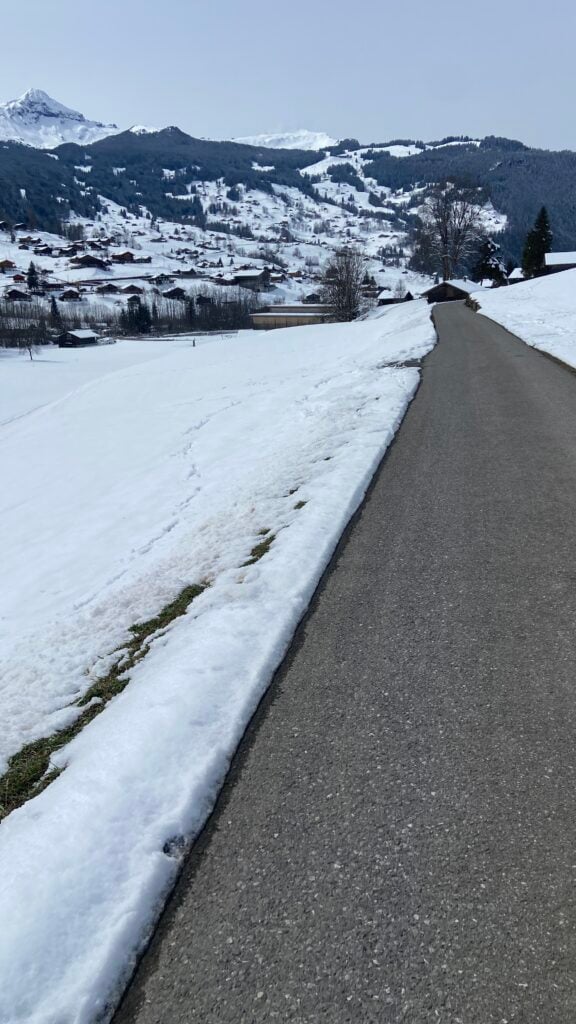
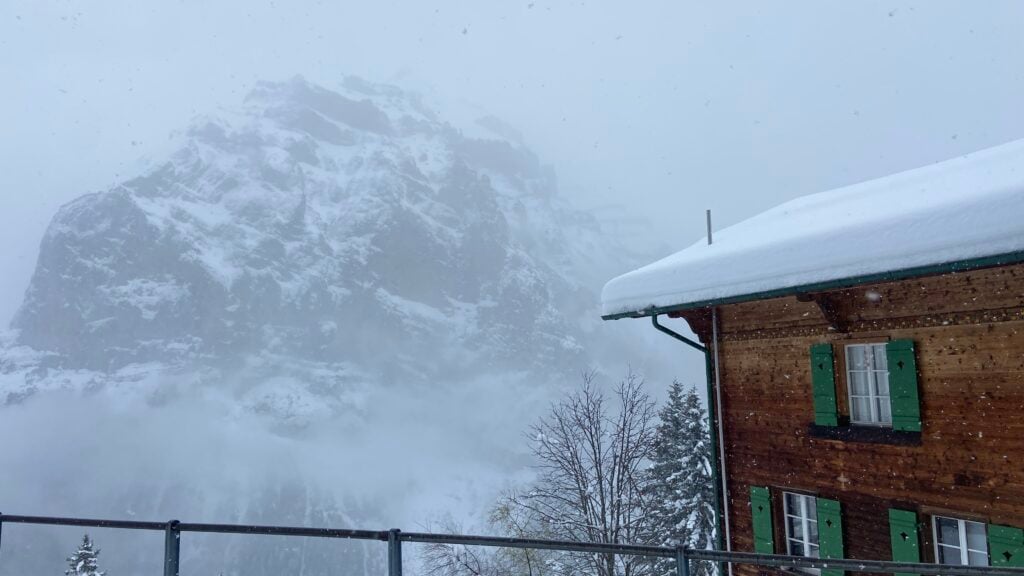
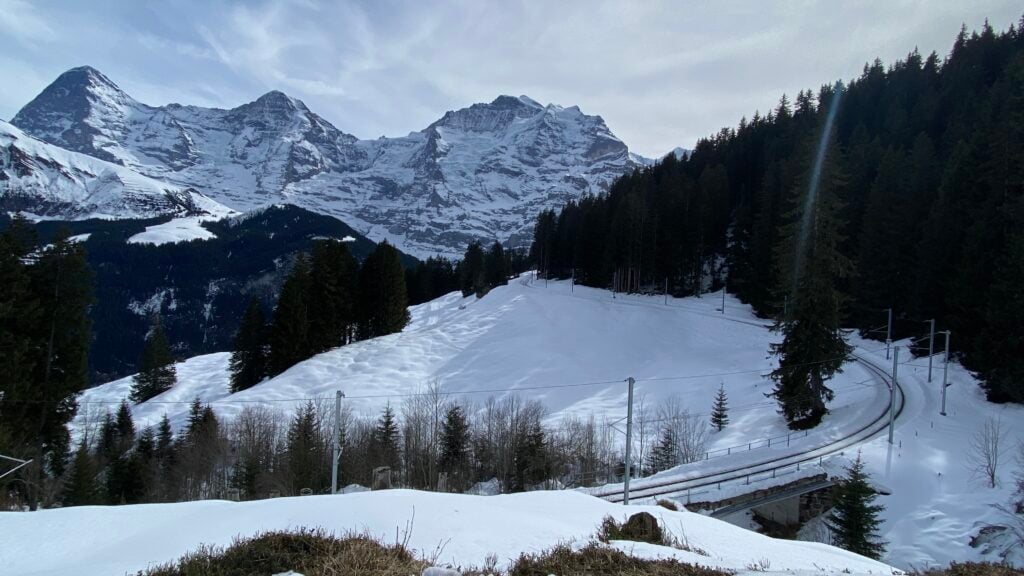
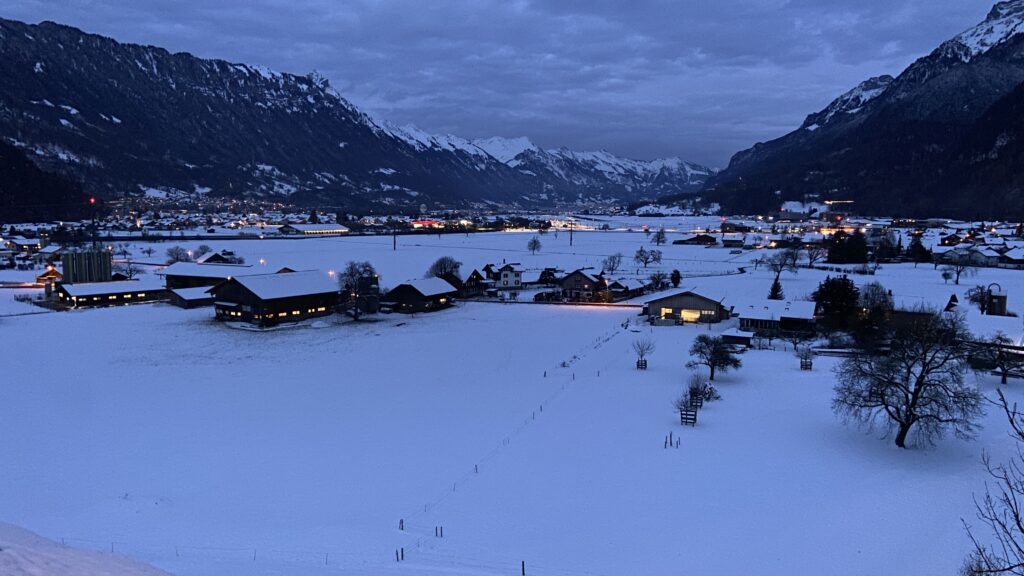
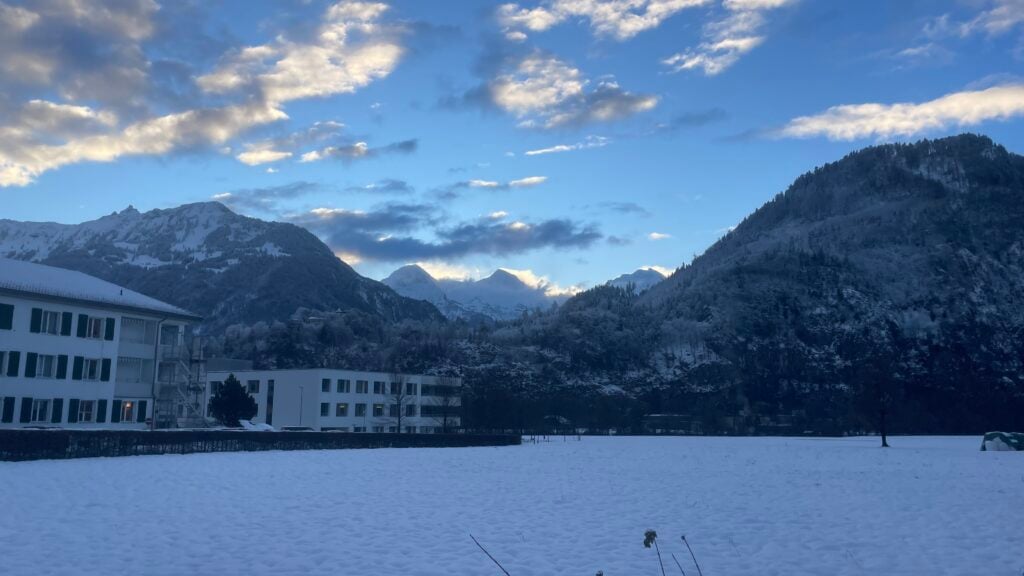
We live near Interlaken, and when our family comes to visit in the Winter, they’re surprised that we aren’t blanketed in snow. In fact, we often just have snow on the ground a handful of days per year, usually in January and February. Otherwise it’s fairly gray, wet, and a mix of green/brown landscapes.
December is still beautiful, especially with the Christmas market vibes, but we don’t often have a white Christmas. And March is great for snow sports, although lower elevations may be starting to warm up a bit. Spring arrives in April, along with a lot of closures between the Winter and Summer seasons, like mountain transportation routes, hotels, and restaurants.
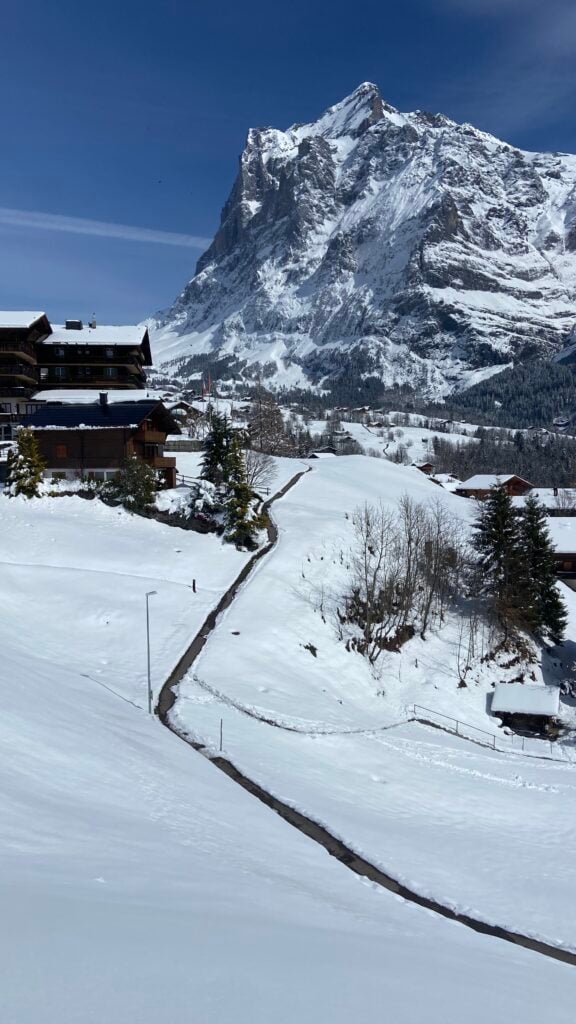
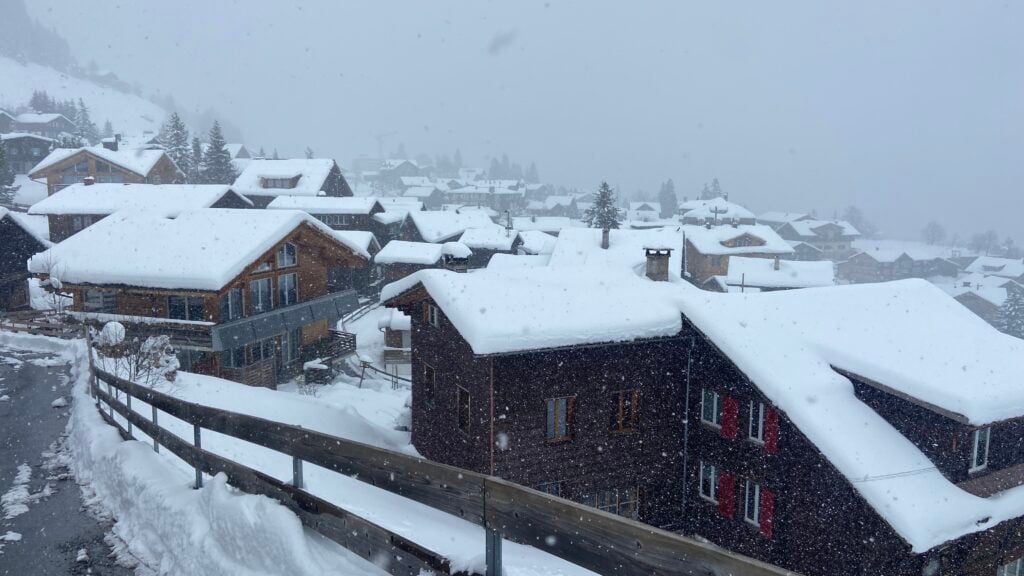
However, Interlaken is the lowest-elevation town in the Jungfrau Region. Mountain villages like Mürren and Wengen are much more likely to have snow most of the season.
So if snowy scenery matters to you, don’t just choose Winter. Choose elevation. This means checking the weather forecast and webcams. We personally check the forecast with MeteoSwiss, the national weather organization, and go to jungfrau.ch to see most of the local webcams.
Winter Changes the Kind of Trip You’re Planning
Once you understand that Winter doesn’t look the same everywhere, the next question is, “What kind of Winter trip are you actually planning?”
Are you planning the classic Winter sightseeing trip with a little bit of everything? Scenic views, mountain trains, snowy villages, and maybe some Winter hiking or sledding?
Are you coming for ski days and snow sports? You probably already know if that’s you!
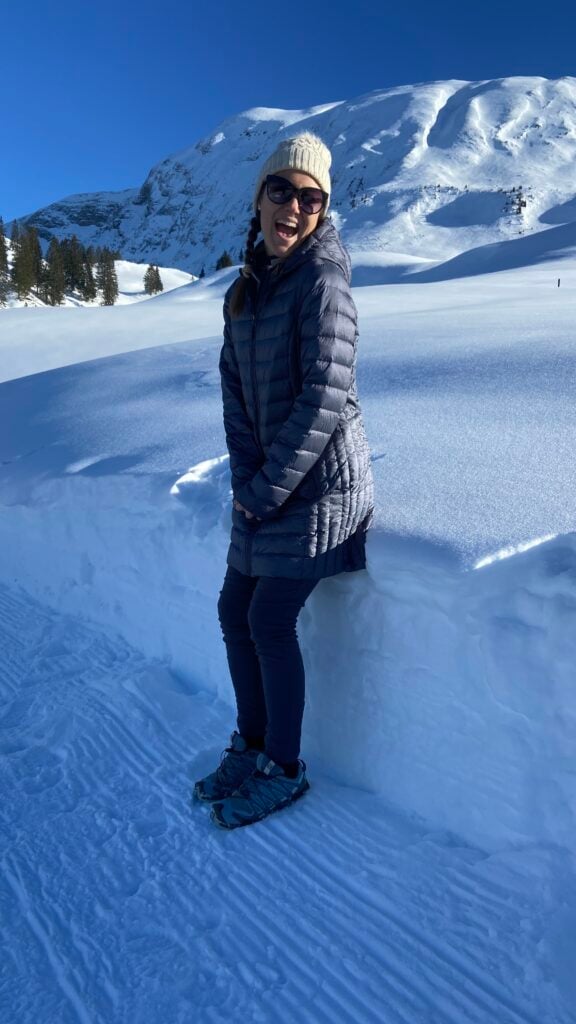
Or are you mostly chasing the cozy alpine atmosphere, just like our parents when they visit during the cold weather months? Car-free villages, fondue and cafés, relaxing lodging, and that Winter postcard feeling?
Most travelers are a mix, but knowing your main priority will make every other decision easier.
Winter Changes Where You Should Stay
And that especially matters when deciding where to stay.
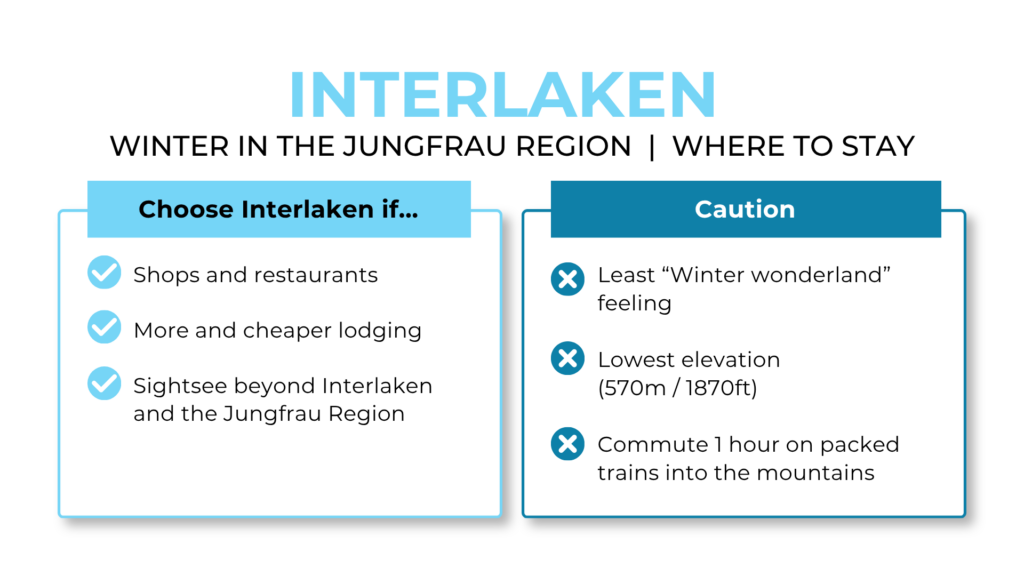
Interlaken
Choose Interlaken if:
- You want tons of shops and restaurants
- More and cheaper lodging options
- Or if you’d like your sightseeing to extend beyond Interlaken and the Jungfrau Region.
Caution:
- However, Interlaken has the least “Winter wonderland” feeling
- Sits at the lowest elevation (570m / 1870ft)
- And you’ll need to commute around an hour each way on packed trains if you’d like to venture into the mountains.
One bonus note is that you could actually look for lodging in Wilderswil. It’s smaller and more peaceful. Although it has fewer amenities, it sits directly on the train line from Interlaken to Grindelwald or Lauterbrunnen. Speaking of Lauterbrunnen…
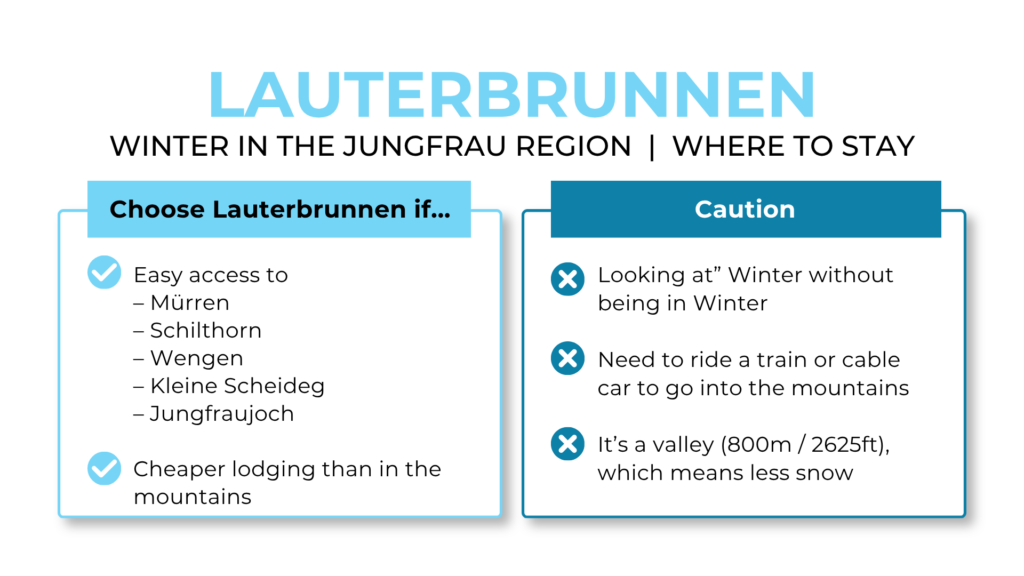
Lauterbrunnen
Choose Lauterbrunnen if:
- You want easy access to both Mürren/Schilthorn or Wengen/Kleine Scheidegg/Jungfraujoch
- Or are interested in cheaper lodging than you’ll find up in the mountains
Caution:
- Yet from Lauterbrunnen, you might be “looking at” Winter without being in Winter
- You’ll always need to ride a train or cable car to get up into the mountains
- And it’s a valley (800m / 2625ft), which means it has more similar snow expectations to Interlaken than to villages higher up
Grindelwald
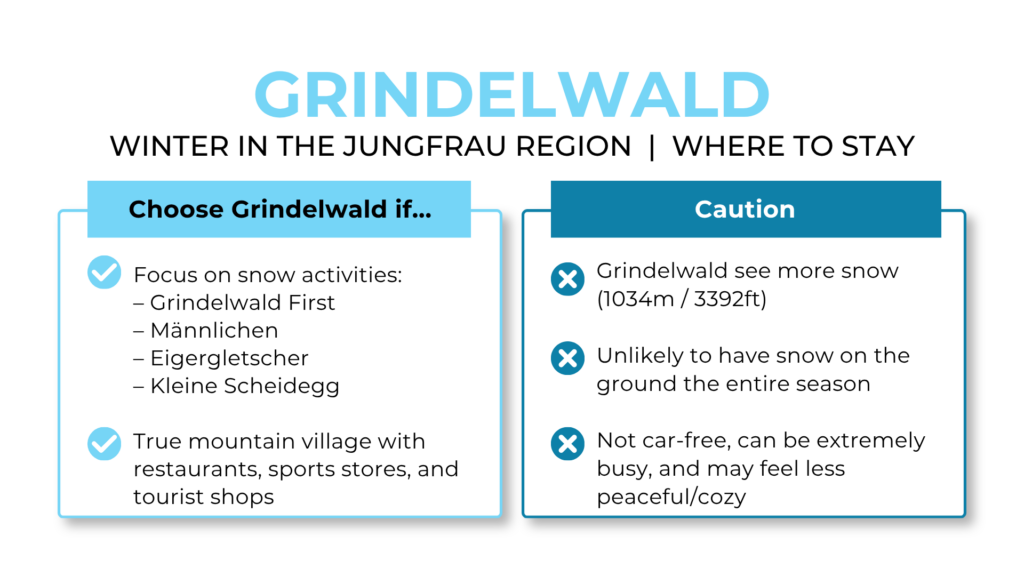
Choose Grindelwald if:
- You want to focus your time on snow sports or activities on Grindelwald First, Männlichen, Eigergletscher, or Kleine Scheidegg
- Or if you’re hoping for a true mountain village with plenty of restaurants, sports stores, and tourist shops
Caution:
- Grindelwald’s elevation (1034m / 3392ft) is higher than Interlaken or Lauterbrunnen and therefore sees more snow. But it’s still unlikely to have snow on the ground the entire season.
- It’s also not car-free, can be extremely busy, and may feel less peaceful/cozy than other mountain villages on this list
Important point:
If you plan to spend a lot of time around Grindelwald, staying there can save you from the hassle of riding crowded trains in and out of the village.
For example, one time we went sledding above Grindelwald. At the end of the day, Jana hopped on the train while I returned our sleds to the rental shop. And by the time I made it to the platform, the train was so jam packed that I literally couldn’t even squeeze in the door. So I waited 30 minutes for the next train and just barely made it on board, squashed like a sardine between dripping skis and sweaty tourists trying to shed their ski jackets.
Wengen
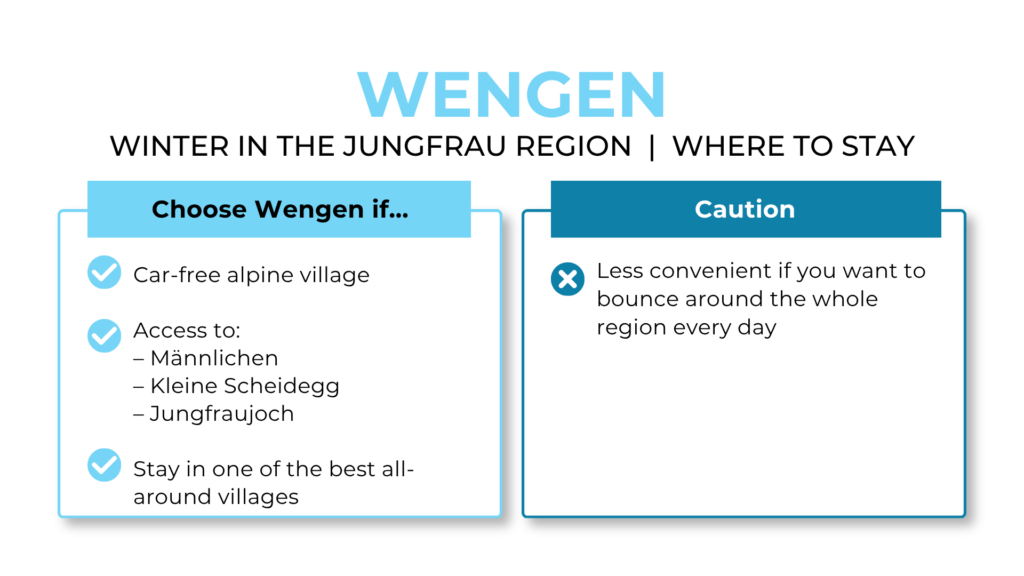
Choose Wengen if:
- You want a car-free alpine village with strong access to Männlichen/Kleine Scheidegg/Jungfraujoch.
- Or if you’re looking to stay in one of the best all-around villages that appeals to nearly all types of travelers
Caution:
- But it’s little less convenient if you want to bounce around the whole region every day
Mürren
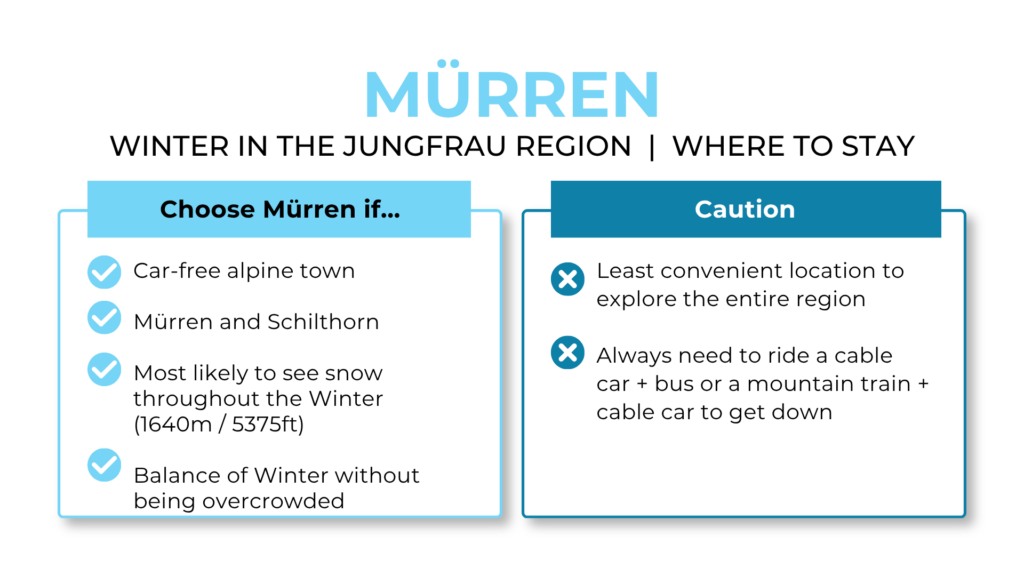
Choose Mürren if:
- You want a car-free town with an alpine/cozy feel, and are focusing your activities around Mürren/Schilthorn.
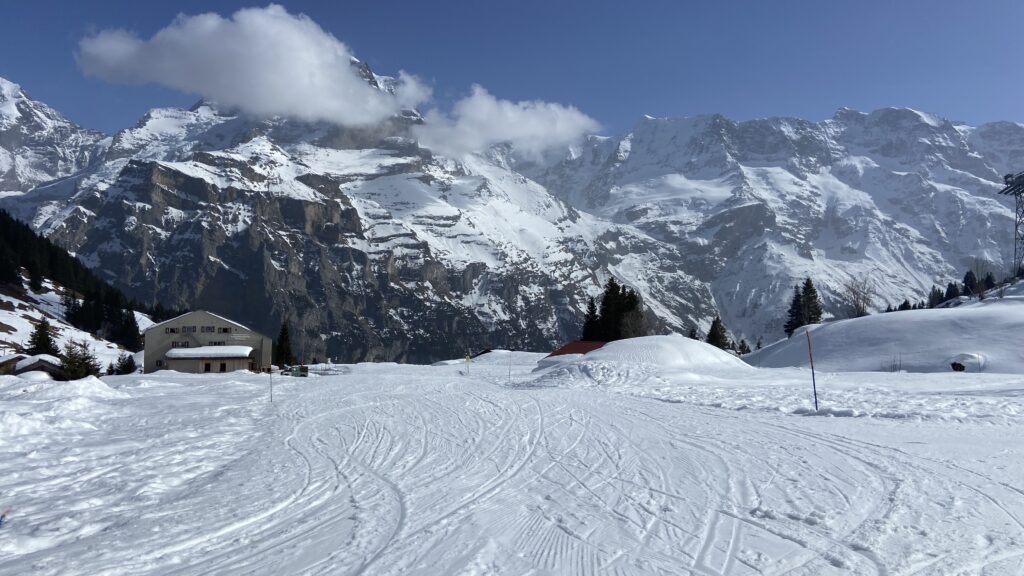
- It’s the highest village on our list (1640m / 5375ft), and the one most likely to see snow on the ground throughout the Winter
- Probably the best balance of a true alpine Winter experience without being absolutely overcrowded
Caution:
- Yet it has the least convenient location to explore the entire region overall. You always need to ride a cable car and bus or a mountain train and cable car to get down from here
Make note that Gimmelwald, the most remote location on this list, could be an even cozier alternative for travelers unconcerned about having amenities.
So in summary…
Choose Mürren if snow and alpine charm are your number one priorities.
Pick Wengen or Grindelwald for convenience within a mountain town.
Or save money by staying in Interlaken or Lauterbrunnen.
Winter Changes Which Classic Experiences Still Work
But choosing the right base is only part of the battle, because Winter also changes which Jungfrau Region experiences are actually available.
If you’ve watched our summer-focused Jungfrau Region videos or used our 1-Week Guide, don’t assume every recommendation translates directly to Winter. Some things are a green light, others are a yellow light, and some are unfortunately a red light.
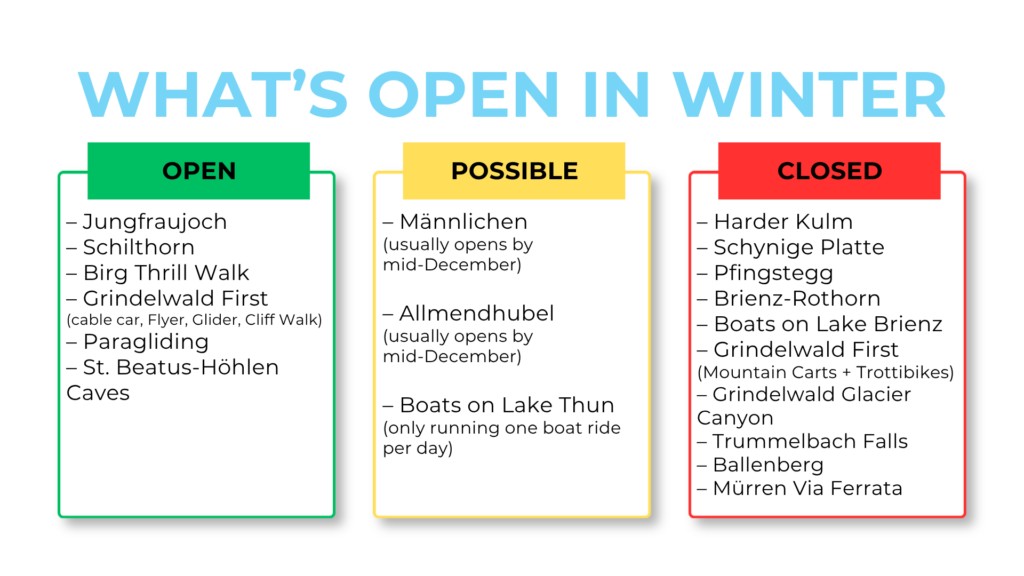
Green Light (Usually available in Winter)
- Jungfraujoch
- Schilthorn/Birg Thrill Walk
- Grindelwald First cable car (Flyer, Glider, Cliff Walk)
- Paragliding
- St. Beatus-Höhlen Caves
Yellow Light (Possible, but check first)
- Männlichen (usually opens by mid-December)
- Allmendhubel (usually opens by mid-December)
- Boats on Lake Thun (running, but normally just one boat ride per day)
Red Light (Likely Unavailable in Winter)
- Harder Kulm
- Schynige Platte
- Pfingstegg
- Brienz-Rothorn
- Boats on Lake Brienz
- Grindelwald First Mountain Carts and Trottibikes
- Grindelwald Glacier Canyon
- Trummelbach Falls
- Ballenberg
- Mürren Via Ferrata
How to know what’s open
But before you get a headache typing every single one of these spots into Google or AI to see if they’re open during your trip, try one of these faster ways instead.
- First, grab our free spreadsheet for a monthly overview of what’s open.
- Or if you have our 1-Week Guide to the Jungfrau Region, you have access to a far more detailed spreadsheet that shows exactly what’s open every single day of the year.
- Browse the operating info for transportation run by the Jungfrau Railways on their website.
- And check the live webcams on their website too.
Winter Adds Different Experiences
But Winter doesn’t just reduce your opportunities — it also adds new experiences that Summer doesn’t offer!
Skiing / Snowboarding
Of course the Swiss Alps are known for skiing and snowboarding.
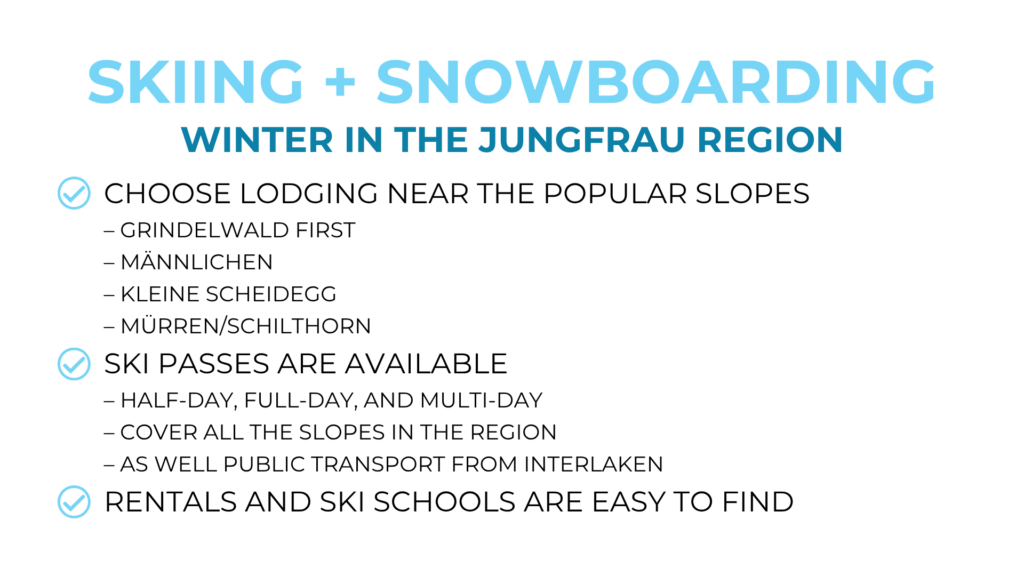
- If your main priority is Winter sports, we highly recommend choosing lodging near the popular slopes. (Grindelwald First, Männlichen, Kleine Scheidegg, and Mürren/Schilthorn)
- Ski passes are available for half-day, full-day, and multi-day, and cover all the slopes in the region as well public transport from Interlaken.
- Rentals and ski schools are easy to find in the major villages. So even if you’re a total newbie, you can turn your trip into a ski holiday.
Winter Hiking
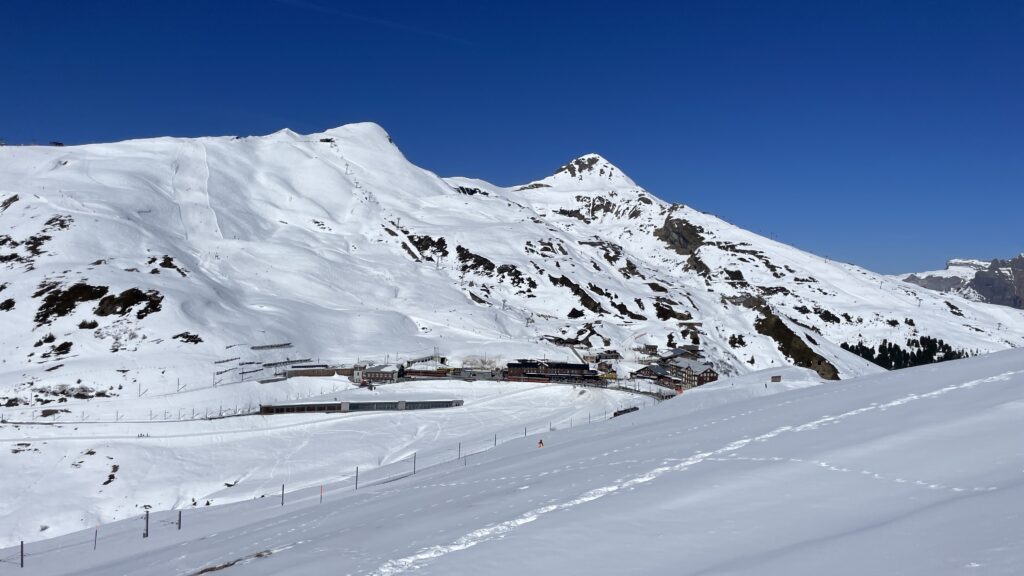
But even if you’re not into skiing or snowboarding, the Jungfrau Region can still offer you an active holiday with Winter hiking. For us, Winter hiking often feels like a totally different experience, even on a familiar trail.
- Some popular summer hiking trails are also groomed into Winter Hiking Trails. (First to Bachalpsee, Eigergletscher to Kleine Scheidegg, Männlichen to Kleine Scheidegg, Grütschalp to Winteregg to Mürren)
- But you need to approach all of these as a yellow light depending on the current snow/weather conditions.
- It’s easy to check the current status of Winter hiking trails to make sure they’re open, which we’ll explain in a minute.
If you’re not familiar with hiking in Winter, here are a few bonus tips:
- We recommend good hiking boots and even trekking poles since steep hills can be quite slippery in snow or slush.
- Don’t forget your sunglasses and sunscreen. If you’re not used to the sun’s reflection off the snow, your eyes and skin could be unpleasantly surprised!
- Winter hiking trails often run on or cross over the same slopes as skiers. So it’s best to stay to the side and to always yield when at an intersection.
- Don’t assume that every Summer hike will be open. In fact, most are not, including the popular Northface Trail near Mürren.
- When you get cold, stop for a warm drink or bowl of soup at a mountain restaurant along the way!
Sledding
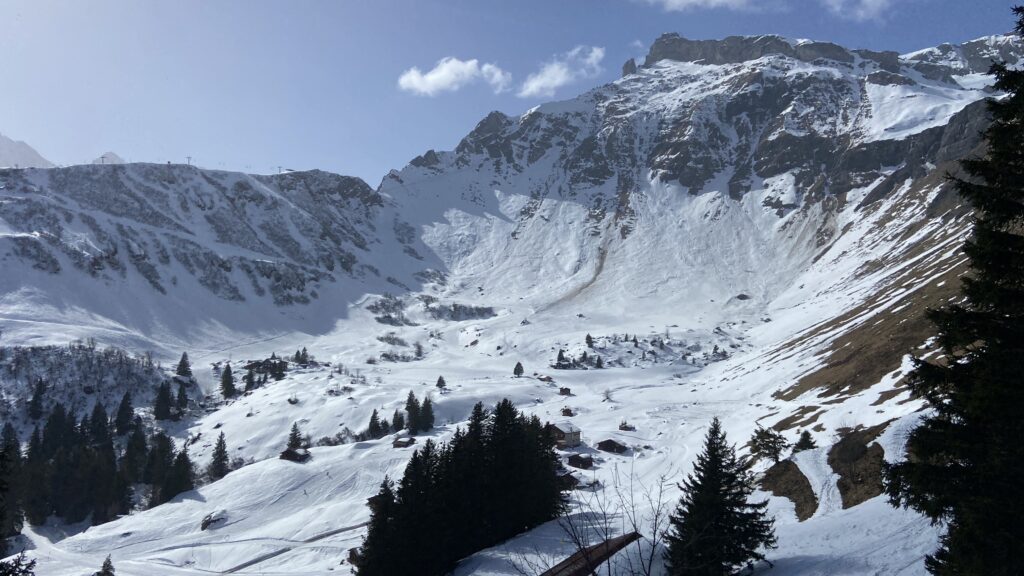
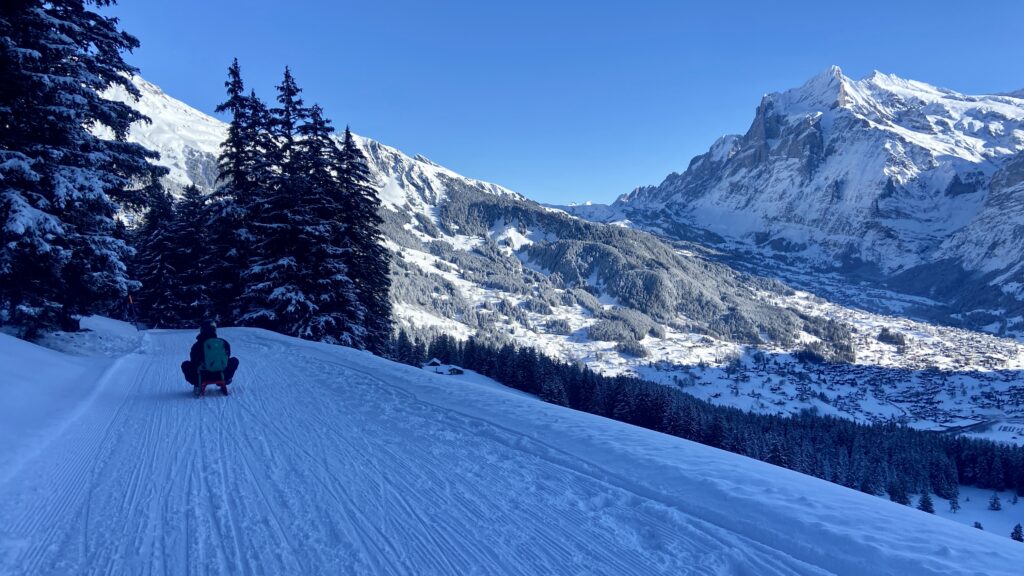
And if you’re not a skier, sledding is one of our favorite Winter activities!
But this isn’t the backyard sledding you’re used to if you grew up in Tennessee like us. This is basically another Winter sport!
- There are great sledding routes at all of the ski areas.
- But our favorite is from Alpiglen to Brandegg. It’s fast, long, and filled with curves. And when you finish, you can ride the train back up for another go.
If you’re new at sledding, or need a bit of reassurance like we did on our first ride, here are a few tips:
- You can rent sleds from the same sports stores that provide ski/snowboard equipment.
- You’ll want waterproof pants and boots, plus a helmet and sunglasses to protect against the spray of snow.
- Like hiking, many sledding routes are parallel to or sharing a slope with skiers or hikers. So steer with caution and yield at intersections.
- If you’d rather enjoy some “light” sledding — more like we were used to in Tennessee! — the Bodmi Arena just above Grindelwald is a great spot.
Check First
Before you do any of these Winter activities, check the live status of ski lifts, slopes, Winter hiking trails, and sledding routes online or in a station, because conditions can change quickly.
We’ve seen:
- Hiking trails closed due to avalanche risk
- Lower-elevation ski slopes and sledding runs closed because there’s not enough snow
- And even ski lift and cable cars closed because of strong winds
And if you plan to do a lot of Winter hiking or sledding, be sure to check out the Jungfrau Winter Hiking and Sledging Pass, which is often a better deal than the normal Jungfrau Travel Pass.
And by the way, sledging is the British English version and sledding is the American English version, but they’re both the same thing!
Winter Changes Your Pace — and Where the Crowds Show Up
Because so many travelers are chasing those same Winter experiences, the rhythm of the region changes too.
Like the crowds.
- In summer, travelers spread across valleys, lakes, hikes, boats, viewpoints, and day trips. But in Winter, many people concentrate around Grindelwald, Wengen, ski slopes, and mountain restaurants.
- Expect restaurants and villages near the slopes to be packed, and consider making reservations in advance, especially for dinner.
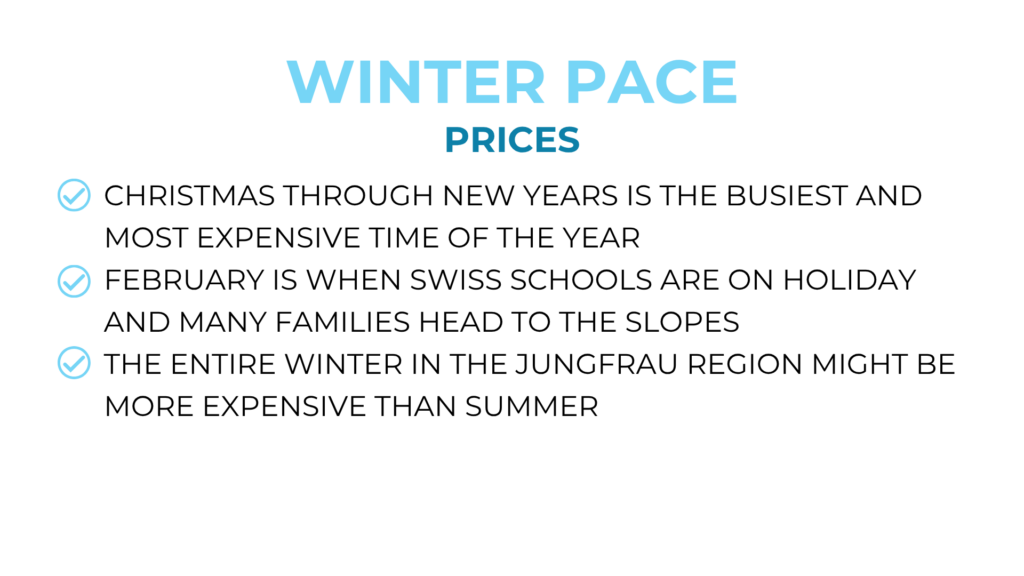
And Winter prices can spike, too.
- The period between Christmas and New Years is often the busiest and most expensive time of the year. And February is when Swiss schools are on holiday and many families head to the slopes.
- But you might find the entire Winter in the Jungfrau Region to be even more expensive than Summer.
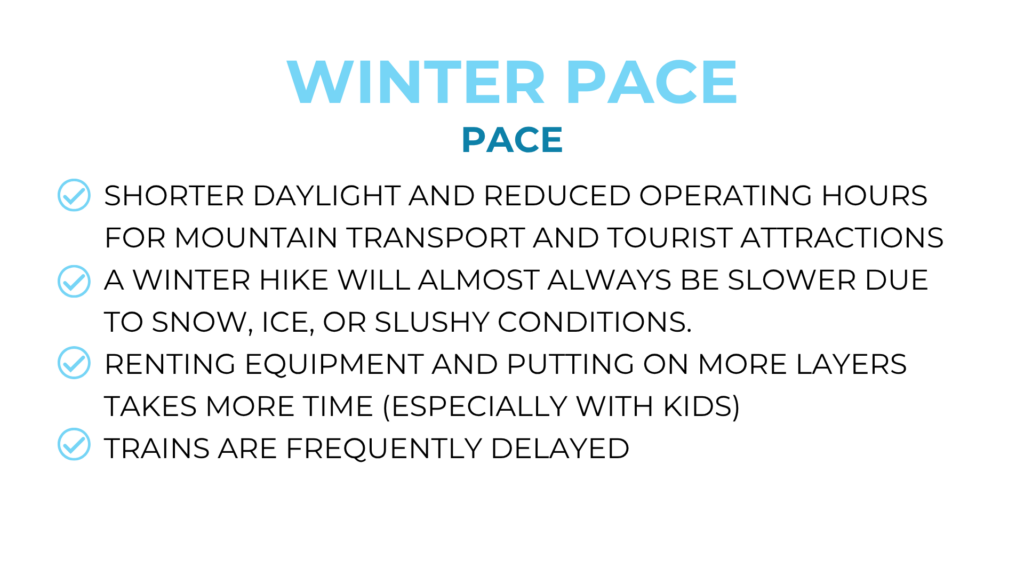
Another rhythm that changes is your pace.
- Shorter daylight and reduced operating hours for mountain transportation and tourist attractions shrink your sightseeing window.
- A Winter hike will almost always be slower than a Summer hike due to snow, ice, or slushy conditions.
- Renting equipment, and even putting on more layers before going outside, just takes more time — especially if you’re traveling with kids.
- And trains are frequently delayed since there are more passengers walking in clunky ski boots carrying lots of gear.
So don’t measure a Winter day by how much you can check off. Because a great Winter day might include one mountain excursion, a snowy walk or sledding run, and a long meal with a view.
Plan for Winter, not Summer!
And you’ll be happy to hear that we’ve done a lot of the planning for you! We are currently expanding our 1-Week Guide to the Jungfrau Region to include Winter activities and adaptations.
But whether you’re using our Guide or planning on your own, see what Switzerland actually looks like throughout the year with this video and free month-by-month spreadsheet. And we’ll see you in Switzerland!