
Swiss transportation can feel like a giant, overwhelming game.
Your mission? To successfully get from Point A to Point B dozens of times throughout your trip, without getting lost or wasting money.
But if you’re like us on our first trip to Switzerland, you don’t know the rules of the game yet. Tickets, timetables, platforms, seat reservations — it’s a lot.
Add in more than a dozen train pass options, and yeah… that’s Level 0: Confusion.
Enter Game Level 0: Confusion
Don’t worry, every traveler to Switzerland starts here, so welcome to the club. But before you waste your hard-earned money or derail your itinerary, use these Swiss transportation Cheat Codes to Level Up.
Want to Watch instead of Read?
Level 1: Convenience
Level 1 — and your first upgrade out of Swiss Transportation confusion — is Convenience. Because convenience is how you escape confusion fast.
1 | Buy a train pass
For 95% of travelers, not buying a Swiss train pass is like throwing your money in the garbage. That’s because train passes act like your ticket, except instead of paying for each individual ride, they cover an entire zone, region, or even the whole country. They are often cheaper and definitely more convenient than buying individual tickets.
Choosing the right train pass (or sometimes multiple train passes) is important — but we’ll elaborate more on this in Level 4.
2 | Buy your train pass before you arrive
You can buy your train pass when you arrive in Switzerland, but there’s no need to wait! All of the major ones can be purchased online in advance so they’re active as soon as you set foot in the land of cheese and chocolate.
If you want to support our small business so we can keep writing articles like this, you can buy your passes from us using the links listed in each section or in our free Swiss Train Pass Checklist.
Buy in advance, skip the lines, and hop straight on the train when you arrive in Switzerland. Cheat Code activated! But how will you know where to go?
3 | Use the SBB App
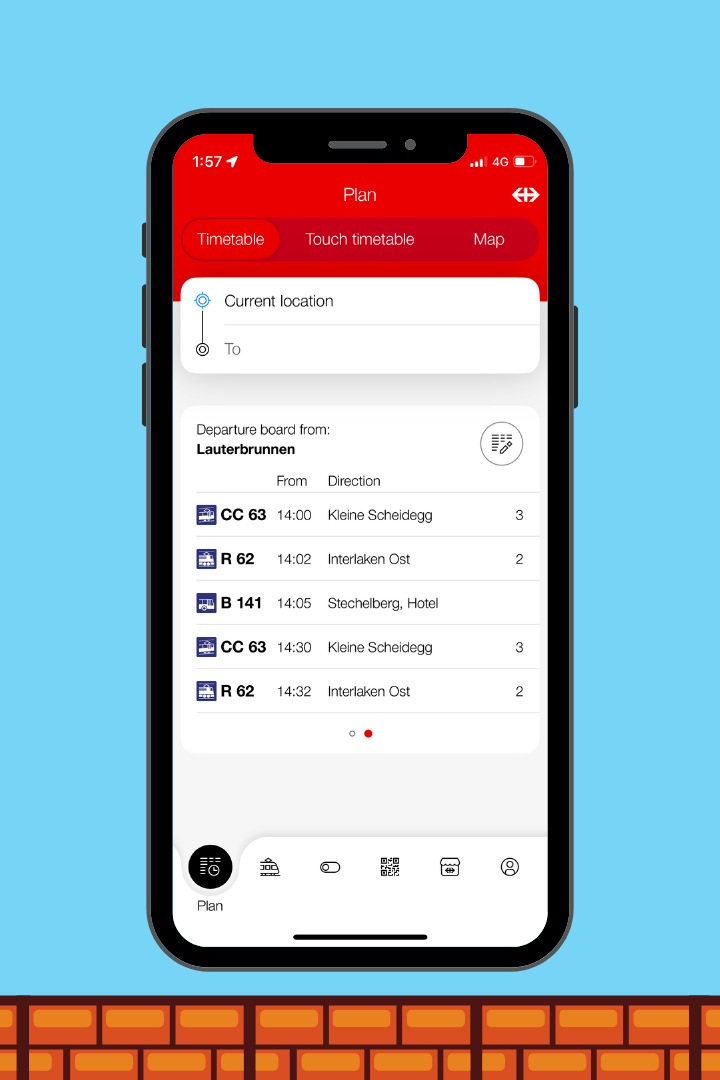
We’ve had nothing but good experiences when we ask for help at train stations. But there’s a much faster way to get answers, and that’s with the SBB Mobile App.
This is the free national railway app for Switzerland where you can:
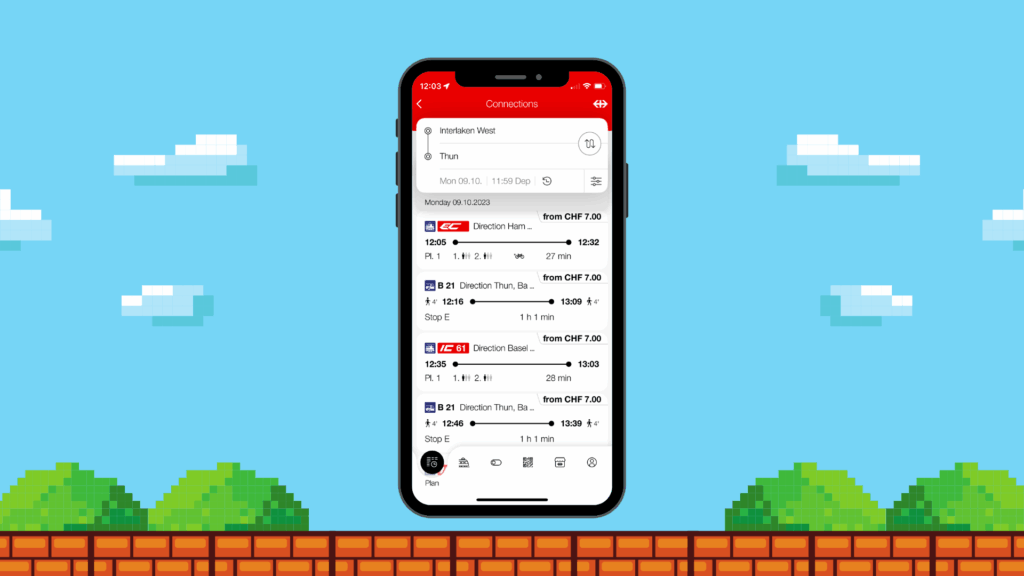
- Search for timetables
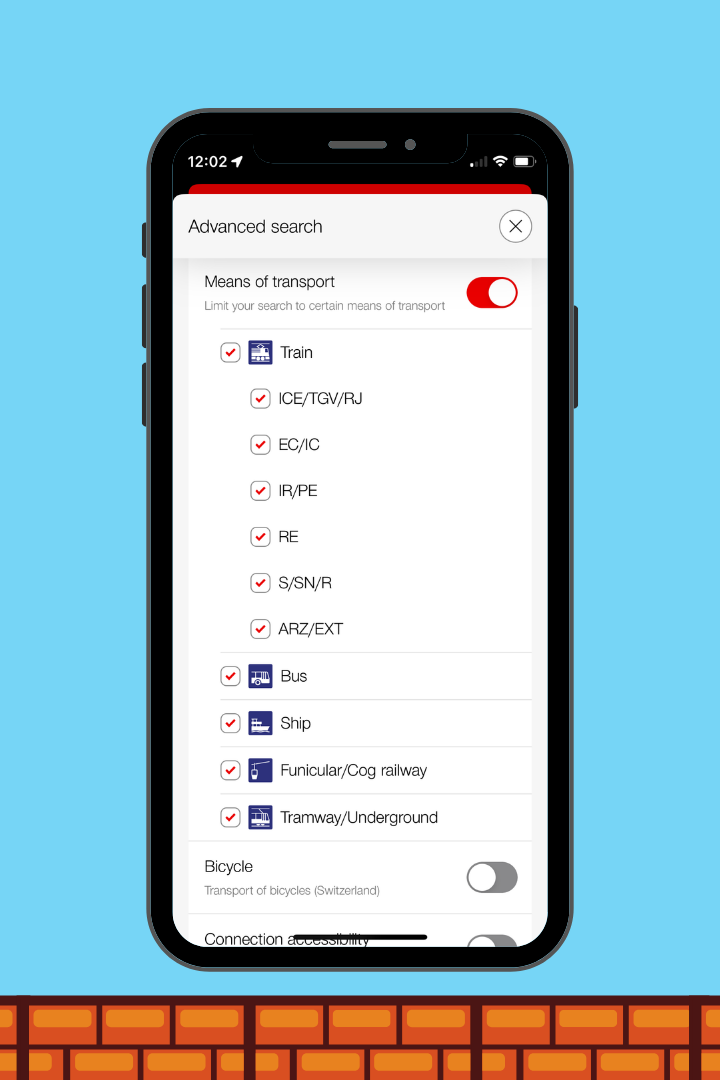
- Navigate routes on all forms of public transport
- Buy tickets for yourself and your travel companions
- Follow live updates during your journey
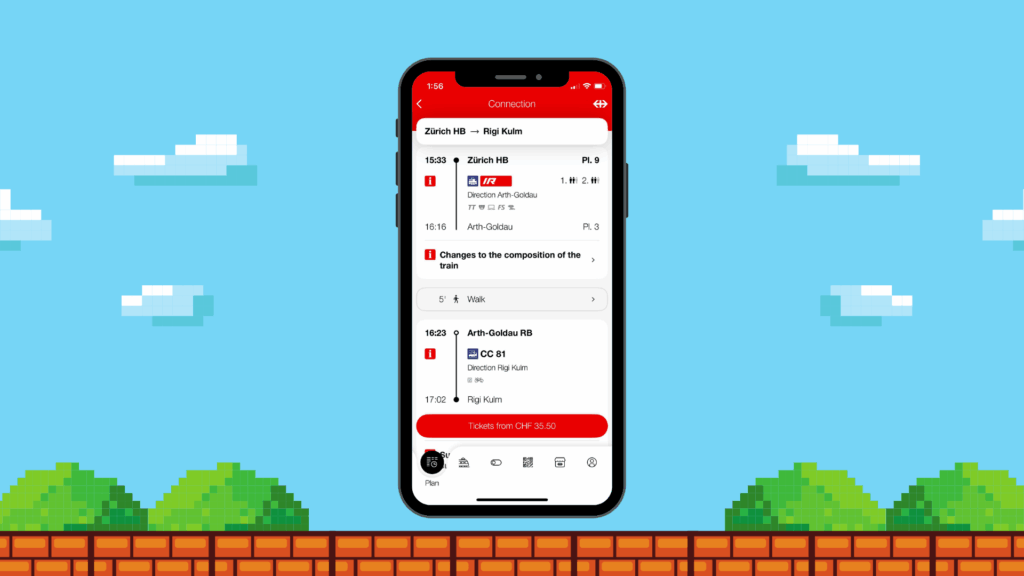
- See where the restaurant and kids carriages are located
- And a whole lot more, like seat reservations and international tickets.
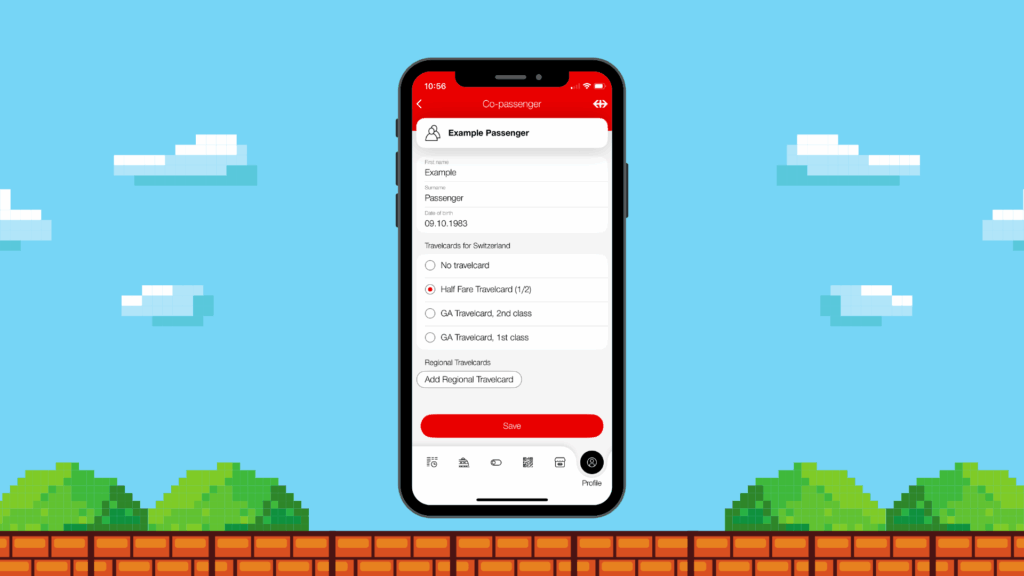
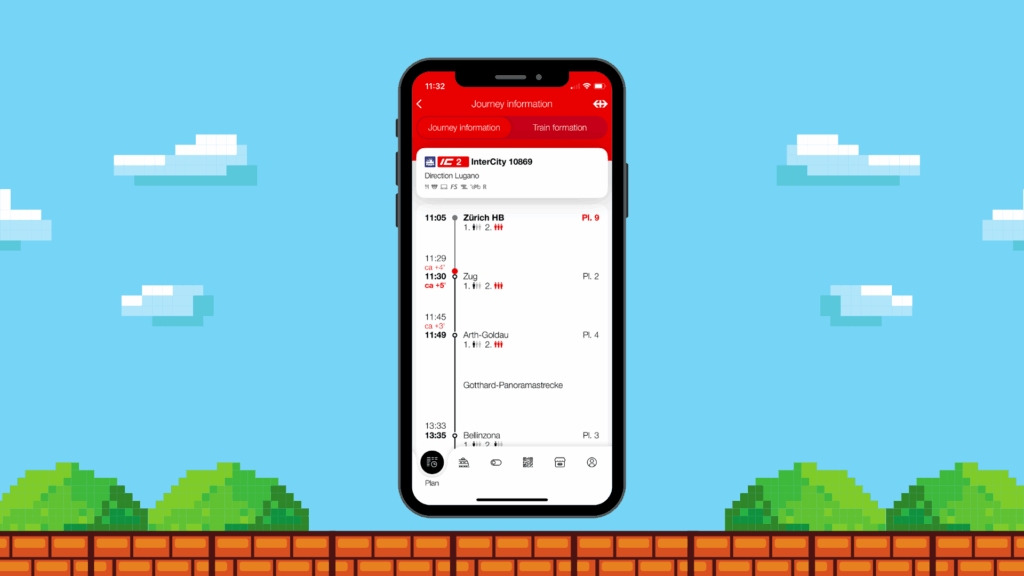
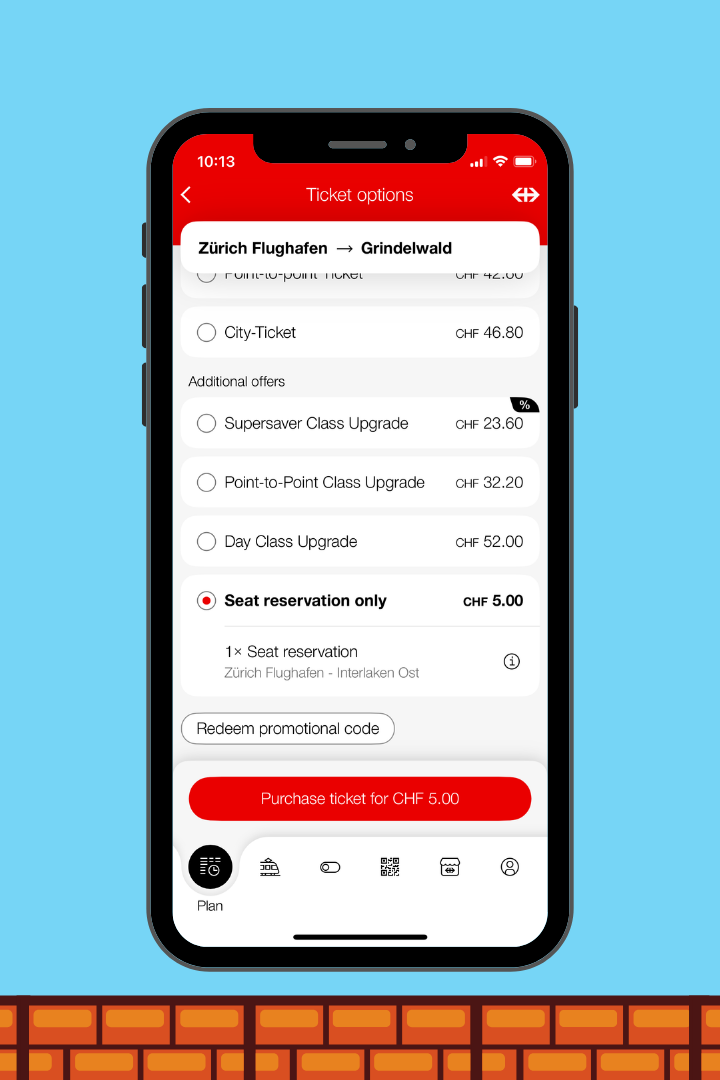
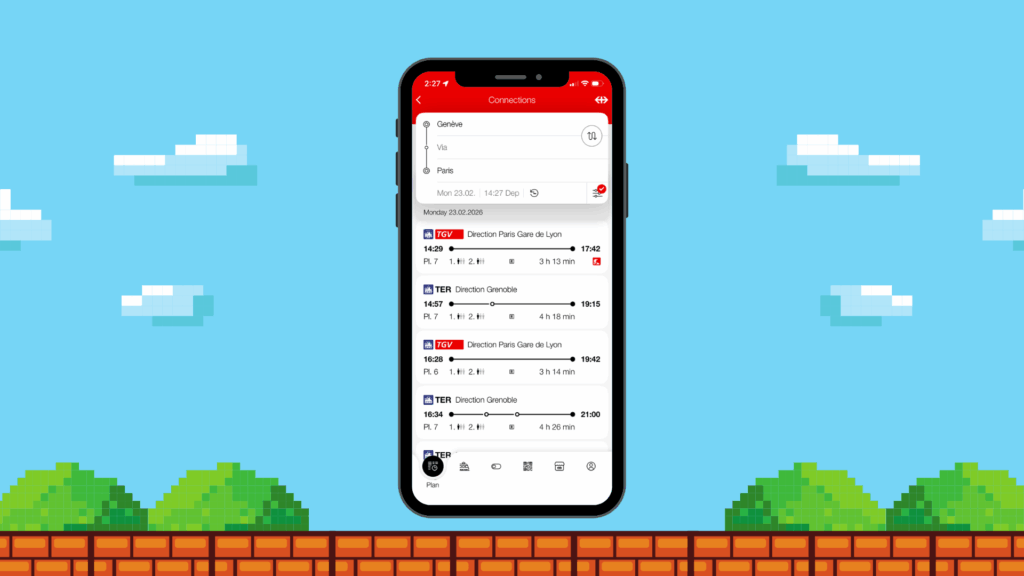
Keep reading because Levels 4 and 5 are going to give you even more reasons why the SBB App is like your secret weapon.
4 | Have Cell Phone Data
But in order to do all of that with the SBB Mobile App, you’re gonna need cell phone data.
Now yes, you can just upgrade with your hometown carrier to cover your travels. But an eSIM is much more affordable.
We’ve personally used and we recommend Holafly eSIMs. They provide unlimited data with no roaming charges. And they’re digital, meaning you can easily install and set yours up in minutes.
By the way, opt for the Europe plan instead of just the Switzerland option. We’ve found that when you’re near country borders, the eSIM sometimes thinks you’re in the neighboring country. Both plans are the same price so you might as well get the Europe-wide one.
And for a Bonus Power Up, you can get 5% off your eSIM with the code APLINSINTHEALPS.
5 | Buy a Swiss Travel Guide
By utilizing all four of these Level 1 Cheat Codes, you’ll be set up to breeze through the airport and on to your first Swiss destination. This could save you an hour compared to stopping by a rail office when you arrive.
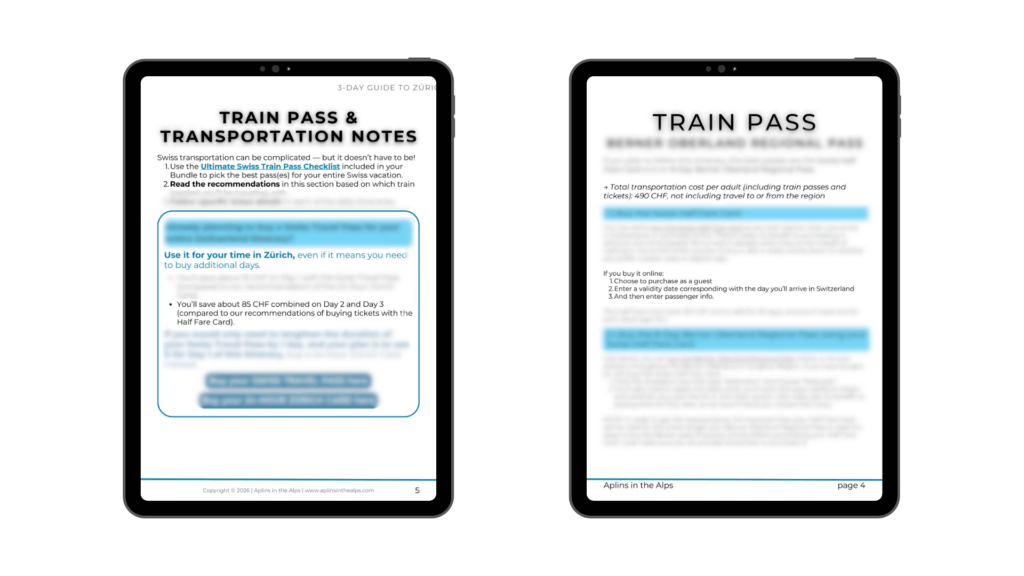
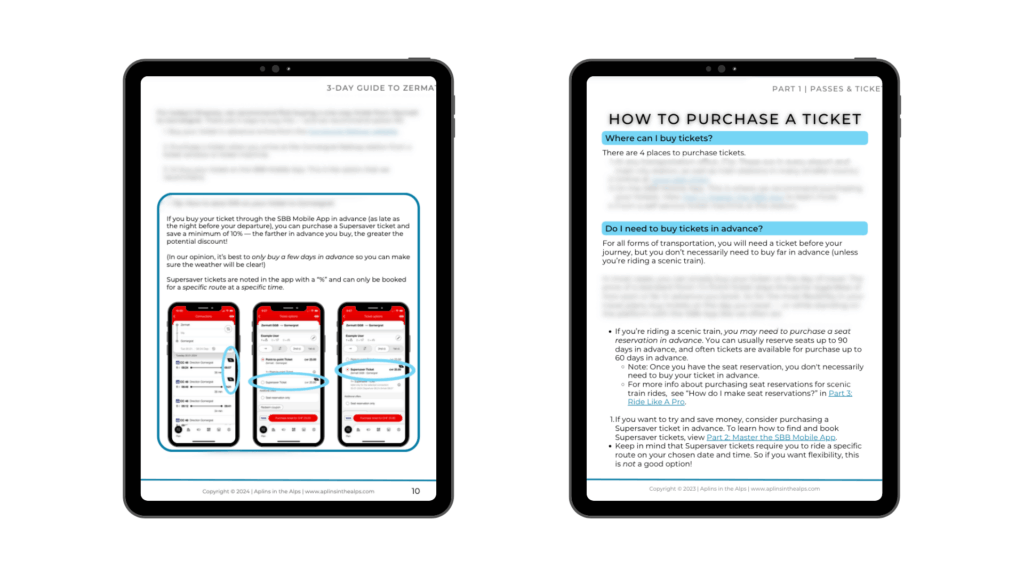
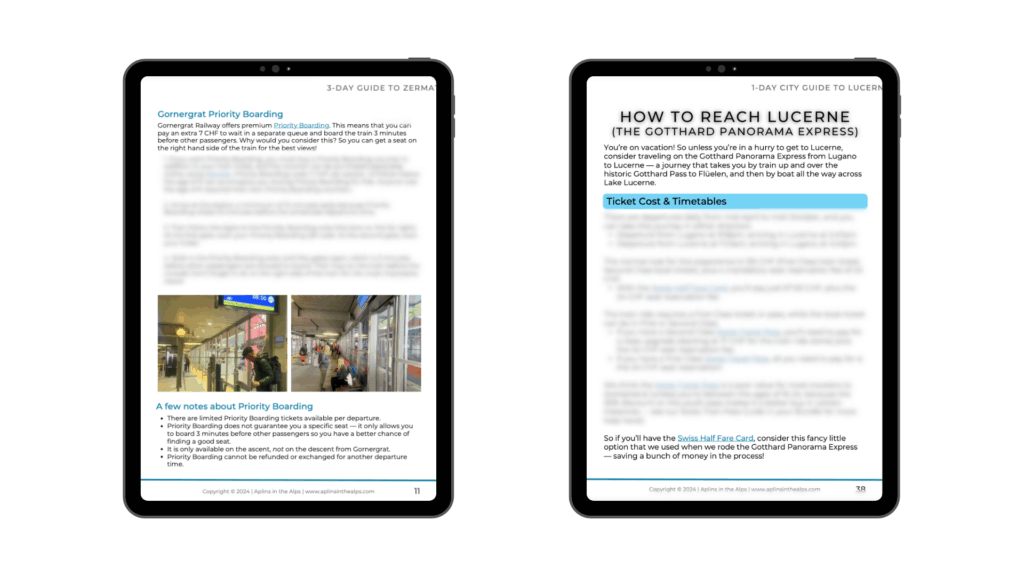
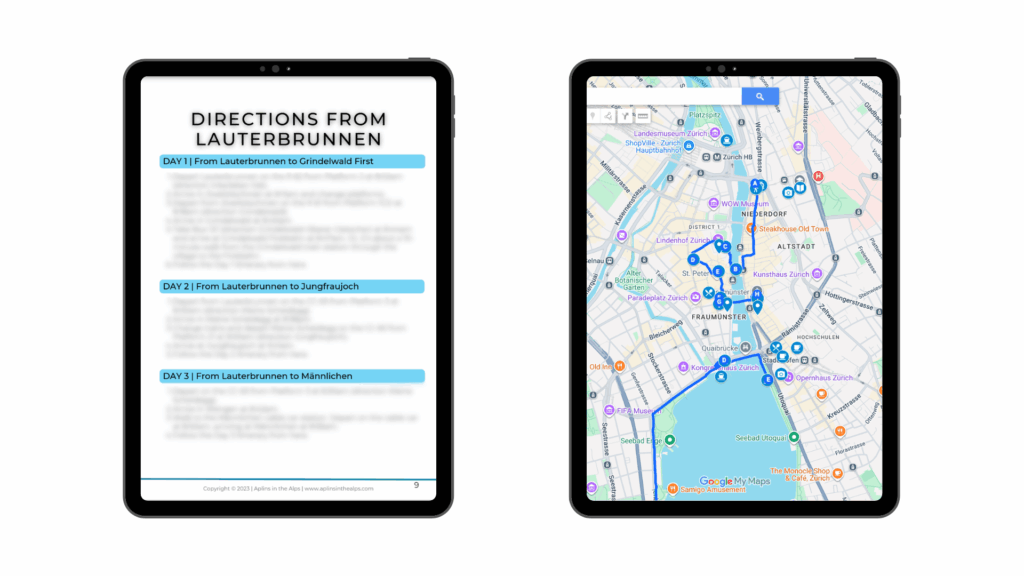
But there’s one more Cheat Code in Level 1: to buy one (or more!) of our Swiss Travel Guides. Each Guide is built around a complete minute-by-minute itinerary, and takes the guesswork out of choosing a train pass, knowing when and how to buy tickets, and when seat reservations are mandatory or worthwhile, plus exactly how to navigate from mountains to lakes to cities and beyond.
Think of us as your digital tour guides in your pocket, thanks to our Swiss Travel Guides!
Level 2: Confidence
With Convenience mode unlocked, it’s time to power-up to Level 2: Confidence. Because knowing what to expect once you enter the train station will be a huge boost.
1 | Find the correct platform

It can feel extremely overwhelming to travel through the stations in the big Swiss cities like Bern, Basel, or Zürich. In fact, Zürich is the largest train station in Switzerland, and one of the busiest in Europe.
How on earth are you supposed to find your train when there are 50 possibilities plus elevators and escalators and who knows what else? Here’s the simplified answer: pretend like it’s an airport.
You enter an airport with your ticket in hand (or maybe on your phone nowadays) and look at the screens to see your travel time, destination, and gate. Then you follow the signs until you reach your gate, where you once again double check the screens to make sure you’re in the right place.
When you enter a train station with your train pass or ticket in hand (or on your phone with the SBB App), find the screens and look for your travel time, destination, and platform. Then, follow the signs to your platform and check the signs for the correct time and destination.
Yes, train stations look different than airports, but you’re really using the same simple navigation methods.
2 | Make sure you’re in the correct class
Okay, now you’re standing on the platform and your train has arrived. You hop on board using the closest door, drop your bags, and take a seat…only to receive a generous fine and get kicked out by the ticket inspector because you accidentally sat in First Class with a Second Class ticket.

The Class for each carriage is clearly marked on the outside of the train, as well as on the inside. But our next Cheat Code shows you an even easier way.
3 | Wait in the correct platform sector
Wait in the correct platform sector instead of just boarding at the nearest door.
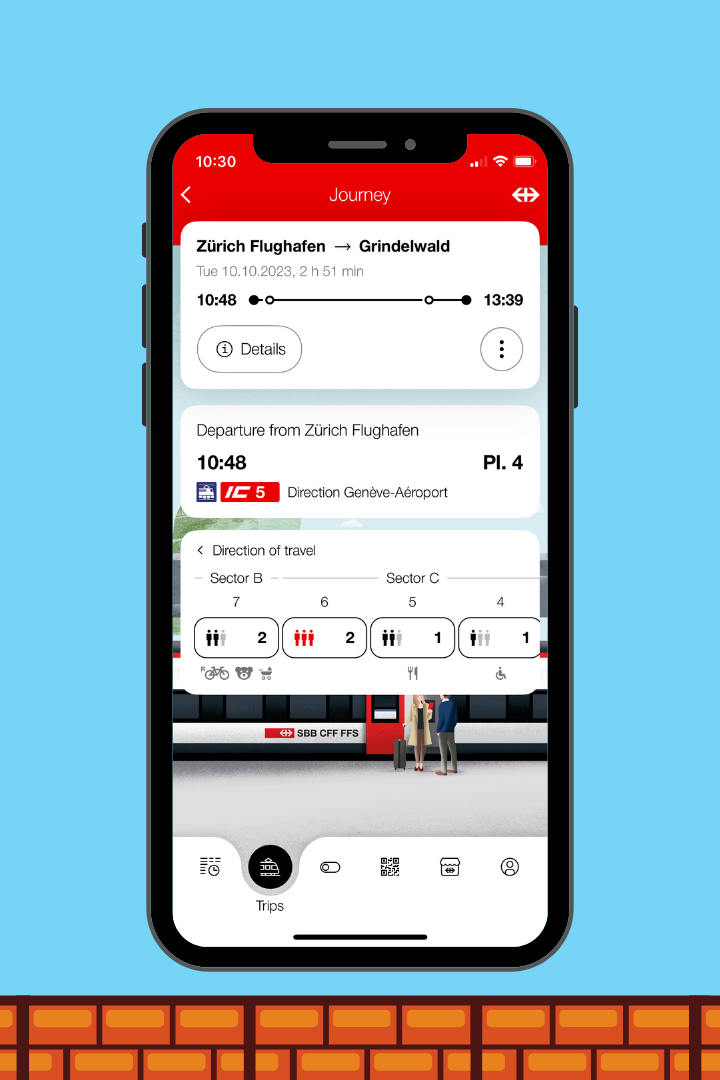
The platform signs show you a little train with the numbers 1 and 2 on it, indicating Classes for each carriage. They also show a platform sector letter. So in this example, we’d want to wait in sector C for the Second Class carriage. This same info is also displayed on the SBB App.
And a bonus Cheat Code is that you can also use the handicap icon to find the low-floor boarding doors which are also convenient when you have rolling suitcases or baby strollers.
4 | Buttons: to push, or not to push? That is the question!
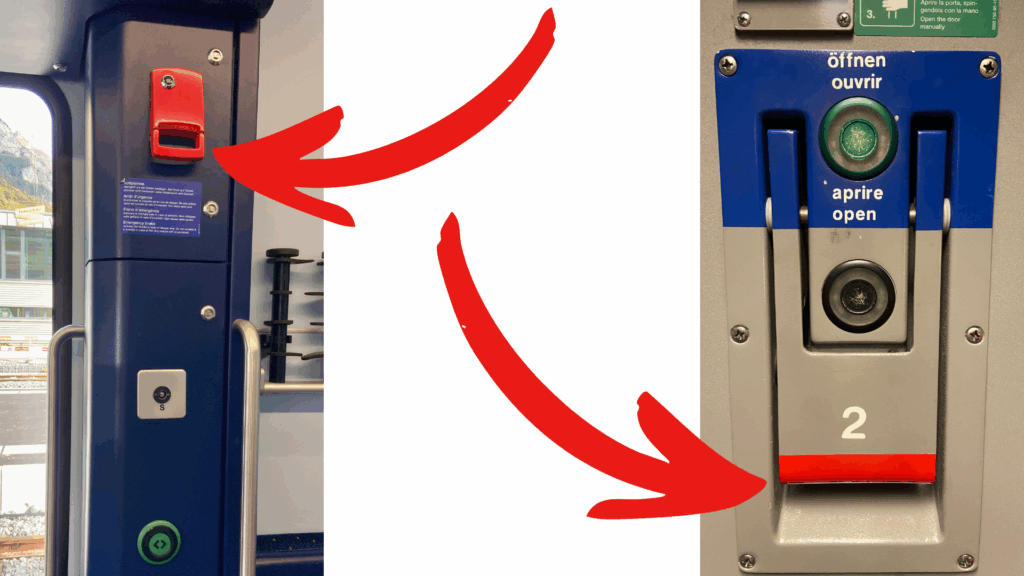
When a train pulls into a station, the doors will sometimes open automatically. But if you’re waiting to board or exit and the door is closed, simply press the button.
Just never, ever, ever — say it again with me — never, ever, ever pull the thing that looks like this — that’s the emergency break. And yes, we’ve been on a train when it suddenly ground to a halt and some poor tourist was fined hundreds of Swiss Francs for accidentally pulling it.
While we’re on the topic, you’ll usually need to request a stop on buses and trams. Sometimes they stop automatically at major points along their route like train stations, although it’s best to just be in the habit of requesting a stop anyway.
And once in a while, especially in smaller villages, it might be necessary to request a stop on the train too. Usually this will be indicated on the screens and on the platform.
5 | When will my tickets be checked?
It is rare that you need to show your ticket before you board. That’s usually only for mountain trains or cable cars, where you’ll sometimes scan your ticket at a turnstile to enter.
For everything else, you simply hop on, find a seat, and an attendant will come around later to check. It’s a good idea to have your tickets and passes ready so you don’t slow down the inspectors when they come around.
Sometimes the attendant won’t make it around to check your ticket before you complete your route, and that’s totally okay.
The whole process is based on the honor system, although there can be ticket inspections at any time, sometimes by an undercover inspector.
So you always need a valid ticket or pass to travel on public transportation throughout Switzerland — whether they’re checked or not.
6 | Choose routes with fewest changes
As you can imagine, some routes are more complex than others. Some are direct, meaning you don’t need to change trains along the way, while others require you to hop off one form of transport and board another, sometimes multiple times.

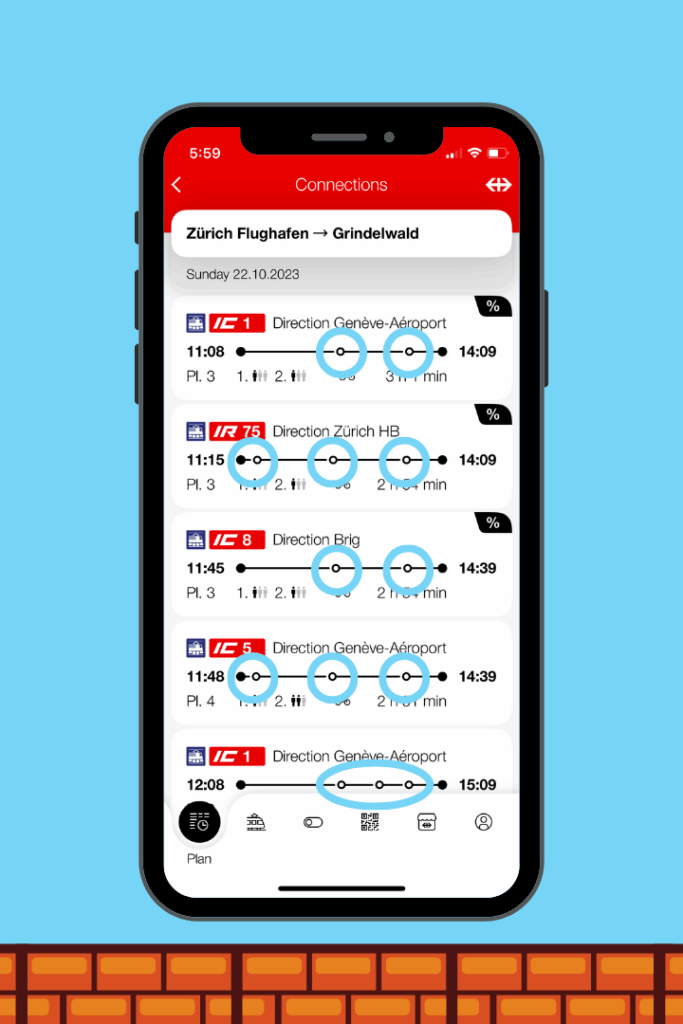
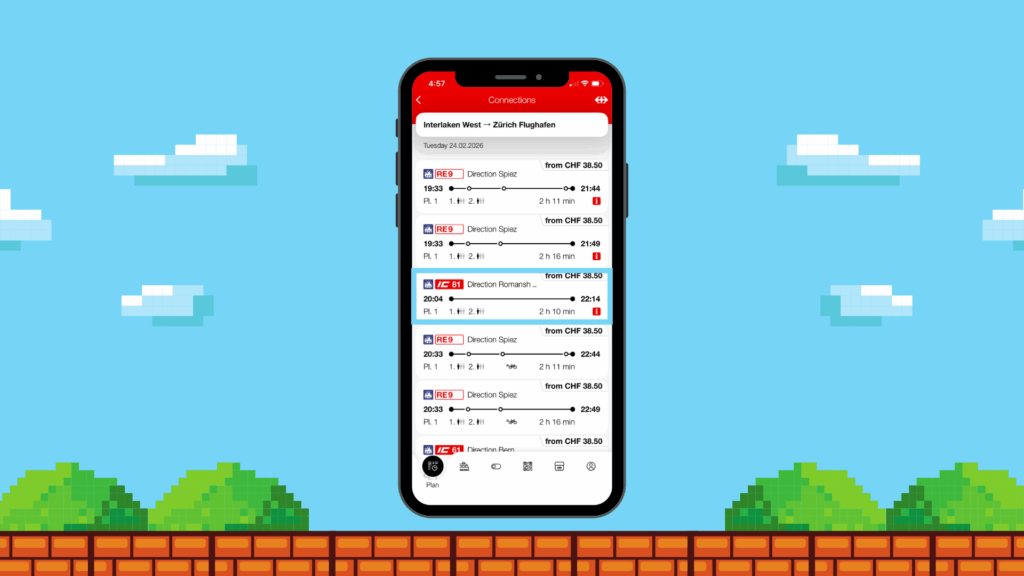
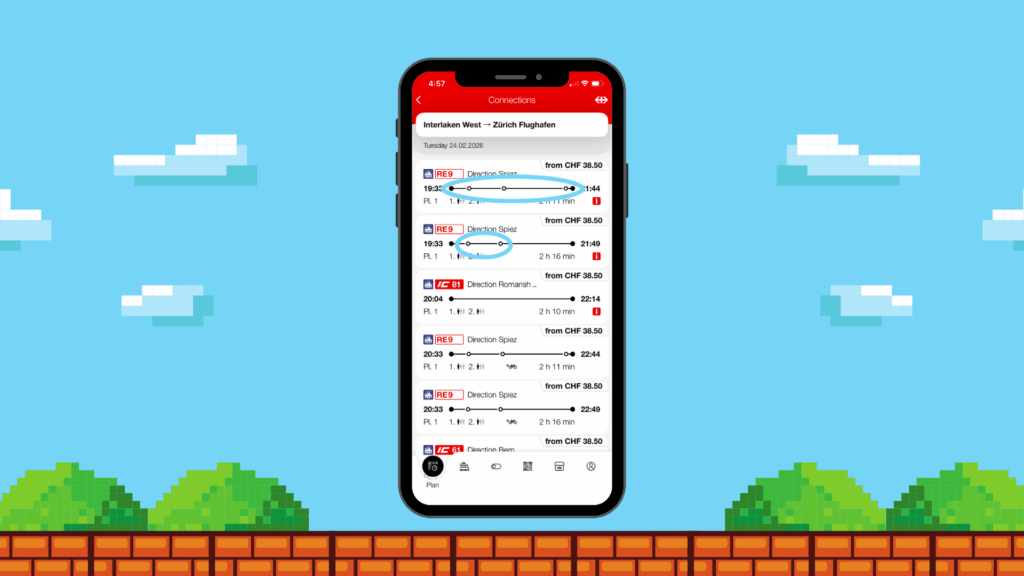
So for this Cheat Code, use the SBB Mobile App to check how many stops are included in your journey, indicated by those open white dots.
Changes are inevitable. But if you have the option, consider selecting the simplest route.
For example, there are direct trains between Interlaken and the Zürich Airport about 6 times per day with no changes. But other times have up to 3 changes.
7 | Understand Layovers — do I have enough time?

When you’re trying to get somewhere as quickly as possible and see that you only have 5 minutes to change trains, your natural response is, “Oh my gosh, will 5 minutes be enough time?”
That depends on your definition of plenty. But you can do it! Wait near the train doors so you can exit as soon as the train stops. Then, use the SBB app to efficiently see which platform you’ll arrive on and depart from.
Aside from the big stations like Bern and Zürich, most Swiss train stations will have less than 10 platforms, making it really simple to navigate in plenty of time.
8 | What if I miss my train?
But it’s inevitable that, at some point, you’ll miss a train or bus. And don’t sweat it. There will almost always be another one within 30 minutes — or even sooner.

If your route is covered by your train pass, there’s no need to worry. And if you bought a standard Point-to-Point Ticket, that ticket is good for your exact chosen route for the entire calendar day.
So take this as an opportunity to slow down or spend a few minutes walking around a town you may not have visited otherwise!
9 | Know the routes covered by your train pass
It sounds obvious, but you don’t want to pay for tickets you don’t need! So make sure you understand which routes are and are not covered by your train pass.
You can do this by studying and understanding the area of validity. Or if you have one of our Swiss Travel Guides, this information is already included for every single ride in our daily itineraries.
10 BONUS | Ultimate Guide to Swiss Transportation
If these types of tips are building your confidence but you know there’s more nitty gritty to learn before your trip to Switzerland, then check out our Ultimate Guide to Swiss Transportation. If you have a question about Swiss transportation, then you’ll find the answer here:
- How do I buy the Half Fare Card? Which Swiss cities have Guest Cards?
- How do I buy Super Saver tickets? Where do I make a seat reservation?
- Can I load my pass onto the SBB App? How do I see if my train is delayed?
- Where is the bathroom? I think you get the idea.
97% of customers give this Guide a 9 or 10 out of 10 rating, and say things like,
- “We would have been so lost without this.”
- “It gave us the confidence to conquer traveling in Switzerland.”
- “I really liked all of the helpful SBB App screen shots and pictures in the train stations.”
But if you’re not ready to purchase just yet, you can test out our free Swiss Train Pass Checklist. Just follow the steps until you find the best match for your itinerary, then conveniently purchase your passes using the links included. Easy as 1-2-3!
Level 3: Comfort
Now things are starting to get fun! With your new-found confidence, it’s time use more Cheat Codes to power-up to Level 3: Comfort. Because you’re paying good money for your trip to Switzerland, so why not make the journey as enjoyable as possible?!
1 | Where to put luggage
Where can you stash your suitcases? Every train is different, but there are usually storage spaces near the doors, near the seats, in overhead bins, or below the seats. And there may be extra room around foldable seats, or by the stroller and bike parking if it isn’t already full.
But one trend we’ve noticed is that in general, Swiss trains are lacking in storage for large bags. So it’s a good idea to travel light! And if your train is full, please do not take up valuable seats with your luggage. If you do, a Swiss grandma will surely scold you and ask you to move your bag so she can have a seat.
2 | Shipping baggage
Speaking of traveling light, what if you didn’t have to lug your bags around at all? You’ll be happy to hear that there are a few different options to ship your suitcases to your destination.

You can ship from station to station, or they can even pick up and deliver right to your door. Most items take up to 2 days to arrive, although there is same-day shipping as well. If you’re interested, all of the options are on the SBB website.
We’ve used this service at least 5 times and find the entire process from drop off to pick up so convenient and smooth!
3 | First Class vs Second Class

So what’s the difference between First Class and Second Class? Not a lot, actually!
Typically, First Class has a 1×2 seat configuration instead of 2×2, so you have slightly more space. Some trains also have specific First Class Business zones or Quiet zones.
And on boats, the First Class section is often on the upper decks, which usually have better views.
When do we think it’s worth splurging for the comfort of First Class?
- If you have a lot of luggage, first class provides more space and fewer people.
- If your route is super busy, then buying a First Class ticket usually means you’re more likely to find an open seat.
- If you need to do some work or take a nap, you might prefer the Business Zones or Quiet Zones.
- Lastly, if you’re riding an official scenic train route, there is a real difference between First and Second Class, from the seats to the food and the experience in general. So if you’re thinking about splurging one time on First Class, pick a ride like the GoldenPass Express or Glacier Express.
4 | Use Class Upgrades
But lucky traveler that you are, you won’t need to buy a First Class train pass or ticket to ride in First Class.

Here’s the Cheat Code: If you already have a Second Class train pass or ticket, you can simply buy a Class Upgrade instead of a whole new ticket! In most cases, this is the difference in price between a Second Class and First Class ticket, so you can buy this last-minute without having to pay an extra premium.
This is an amazing Cheat Code to keep in mind for those times you hop on a train overflowing with people. Simply buy in the SBB app or from the train attendant, and then waltz right into First Class luxury!
5 | Eating on trains

There’s something fun and nostalgic about eating on a moving train. Some Swiss trains have bistro or restaurant cars that allow you to buy food on-board. And in many of those cases, you can either sit and eat in the restaurant, or take the food back to your seat.
But it can be a pretty expensive experience for fairly mediocre food. So if you prefer, you can bring your own food and drinks (including alcohol) on board with you. And since most train stations have a small grocery store, this is a nice budget alternative.
Side note for some of those panoramic train journeys: the on-board food is very good, and is absolutely a part of the experience.
6 | Toilets
Of course you won’t find toilets on buses or cable cars or funiculars, but there are toilets on most trains and larger boats (labeled as WC). And because it’s Switzerland, they’re usually quite clean.
Here’s a tip for your bladder. Many of the larger train stations have paid bathrooms, so save a few Francs by waiting to use the bathroom until you board your train.
7 | Seat Reservations

Do you need seat reservations? The simple answer is, not usually. Most trains have open seating that works on a first-come, first-serve basis.
But that’s not the case for scenic trains like the Glacier Express and Bernina Express — reservations are mandatory for these trains.
And even some mountain trains like to Jungfraujoch require seat reservations during parts of the year.
In our Swiss Travel Guides, the itinerary always notes if a ride requires a reservation, or if we simply recommend it as an “insurance” policy.
But for the majority of your rides throughout Switzerland, a seat reservation is not necessary.
Do you want more cheat codes?
Join our weekly newsletter where we share more “cheat codes” you’ve been looking for! When you become one of our inbox insiders, you benefit from our years of experience (over a decade!) as we share advice on how to travel Switzerland with confidence.
Level 4: Cost Savings
You might be afraid to ask what all this convenience, confidence, and comfort are going to cost you! But have no fear, use these Cheat Codes to power-up to Level 4: Cost Savings. Because Switzerland CAN be expensive, but it doesn’t HAVE to be.
1 | The Swiss Half Fare Card
If you asked us for the number one way to save money on Swiss transportation, it’s the Swiss Half Fare Card.
While we lump it in with other train passes, it’s really more like a coupon card, entitling you to a 50% discount on nearly every ride throughout the entire country. For most of you, simply buying the Half Fare Card and paying half price for all of your tickets is the most advantageous for your budget.
And it might surprise you to know how often it makes sense to buy the Half Fare Card, even if you’ll also have another train pass. We lay out the different train pass options in this post.
2 | Swiss Guest Cards
In many cities and tourist areas, overnight guests receive a complimentary Visitors Card that provides free local transportation and discounted attractions.
Now, this probably won’t replace your need for a train pass, but it can be especially useful if you decide to travel with nothing but a Half Fare Card. Because savings of 3–5 Francs here and there can result in big savings over the course of your trip!
3 | Saver Day Passes
What should you do with long train rides across the country, between regions, or expensive scenic trains like the Glacier Express?
Enter Saver Day Passes, which are basically like buying a Swiss Travel Pass for a single day. They cost as little as 29 CHF in Second Class with a Half Fare Card and can be booked up to 6 months in advance.
You can look up the cost of a Saver Day Pass on the SBB app one day at a time, but we love this resource from BLS which allows you to see a calendar view of Saver Day Passes available in both First and Second Class. We’ll pop a link to this in the description below.
Just keep in mind that, just like the Swiss Travel Pass, Saver Day Passes will not cover you on most mountain journeys.
4 | Supersaver Tickets
Something I love about Swiss transportation is that standard Point-To-Point tickets have a set cost. They do not increase in price as your travel date gets closer. That allows for lots of flexibility without increasing your budget.
And then there are Super Saver tickets, noted with a % symbol in the SBB App. These allow you to lock in a discount by buying your tickets up to 6 months in advance. But there’s a major caveat here — these tickets require you to travel a specific route at your pre-booked time and date. So there’s no flexibility with these like you would have with regular tickets.
In general, we like to buy Super Saver tickets when we know we don’t need to be flexible. For example, traveling to the airport before leaving Switzerland.
5 | Roundtrip tickets
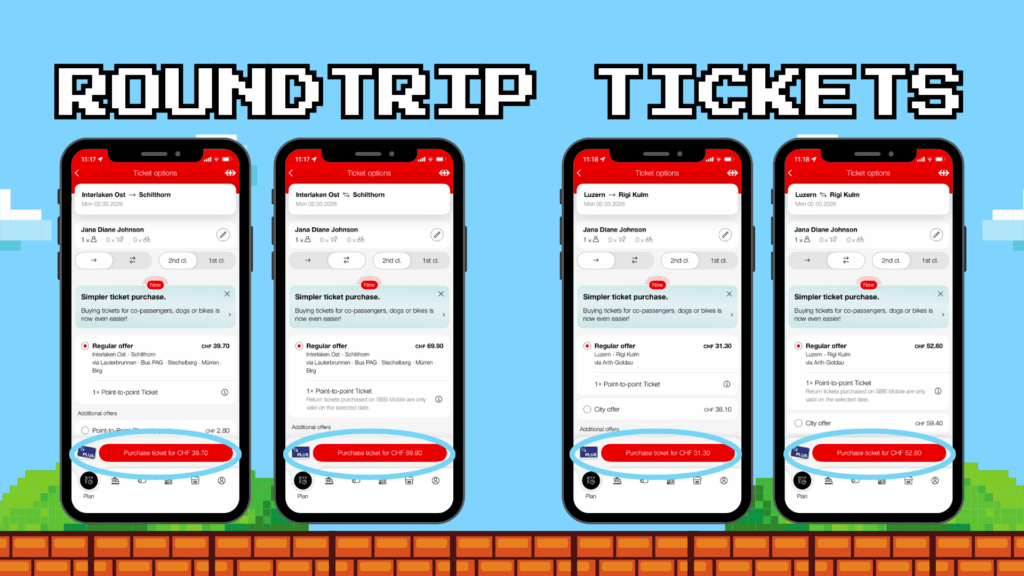
Most of the time, 2 one-way tickets equal the cost of a roundtrip ticket. Makes sense, right? But that’s not always how it works.

On routes like the Schilthorn or the cogwheel trains to Mt. Rigi, you’ll actually save money by purchasing a roundtrip ticket. But you unfortunately won’t know this unless you happen to look. So if you’re planning to go somewhere and return using the same route, just check to make sure you won’t be wasting money by purchasing one-way tickets.
6 | BONUS: Cost Saving Itineraries
We mentioned our Guides earlier, but we want to highlight how they can help you achieve Level 4: Cost Savings.
Not only do they outline exactly how to get from Point A to Point B, but they also tell you exactly which train passes will save you the most money on that specific itinerary.
Level 5: Complete Mastery
Now you’re ready to power-up to Level 5: Complete Mastery. Because once you’re reached this point, traveling Switzerland really is just a game. Here are 3 more Cheat Codes to make your experience next-level.
1 | When scenic routes are actually cheaper
Sometimes the most beautiful way to travel is actually the cheapest way to travel. And unless you’re in a rush, you might as well take advantage.
For example, travel from Zürich to Interlaken via Lucerne instead of Bern because it’s cheaper and more scenic!
What’s nice is that you can often stop along your route to explore, and then continue along the same route with the same ticket later — as long as you don’t backtrack or ride a portion of your route twice. This is a great way to explore smaller towns along the way or enjoy all the intermediate stops along a cable car line!
2 | Birthday freebies

And if you happen to be visiting Switzerland on your birthday, there are some pretty fun discounts. We won’t list them all, but here are a few popular spots you can enjoy for free on your special day. So far we’ve taken advantage of the Schilthorn, Brienz-Rothorn Bahn, and Lake Lucerne boats.
- Schilthorn | Free roundtrip
- Schynige Platte | Free roundtrip and a free dessert
- Brienz-Rothorn | Free roundtrip (seat guarantee not included)
- Niesen | Free roundtrip
- Lake Thun | free First Class day ticket
- Lake Brienz | free First Class day ticket
- Blausee | Free admission
- Lake Lucerne | Free First Class day ticket
- MOB Railway | Free First Class Day Ticket (Montreux – Gstaad – Zweisimmen – Lenk)
- Hoher Kasten (Appenzell) | Free roundtrip
- Monte Generoso (Ticino) | Free roundtrip
- Zürich Zoo | Free entrance for kids under 12
3 | SBB App Game
If you’re so comfortable with this whole Swiss Transportation thing, why not relax and play a game while you travel?

In the SBB App, enter the same “from” and “to” destinations. Now, triple tap the person’s face and your game magically opens. Jump over as many obstacles as possible and see if you can make a new high score. And because it’s so Swiss, there’s even a clock on the top of the screen to make sure you don’t lose track of time and miss your stop!
4 | Ride Like A Pro

These Cheat Codes are no replacement for your own skills and experience. So if you’re ready to ride Swiss transportation like a pro, read this post.
And don’t forget to check out our Ultimate Guide to Swiss Transportation to dive deeper beyond what you’re learned in this post, and we’ll see you on the trains in Switzerland!